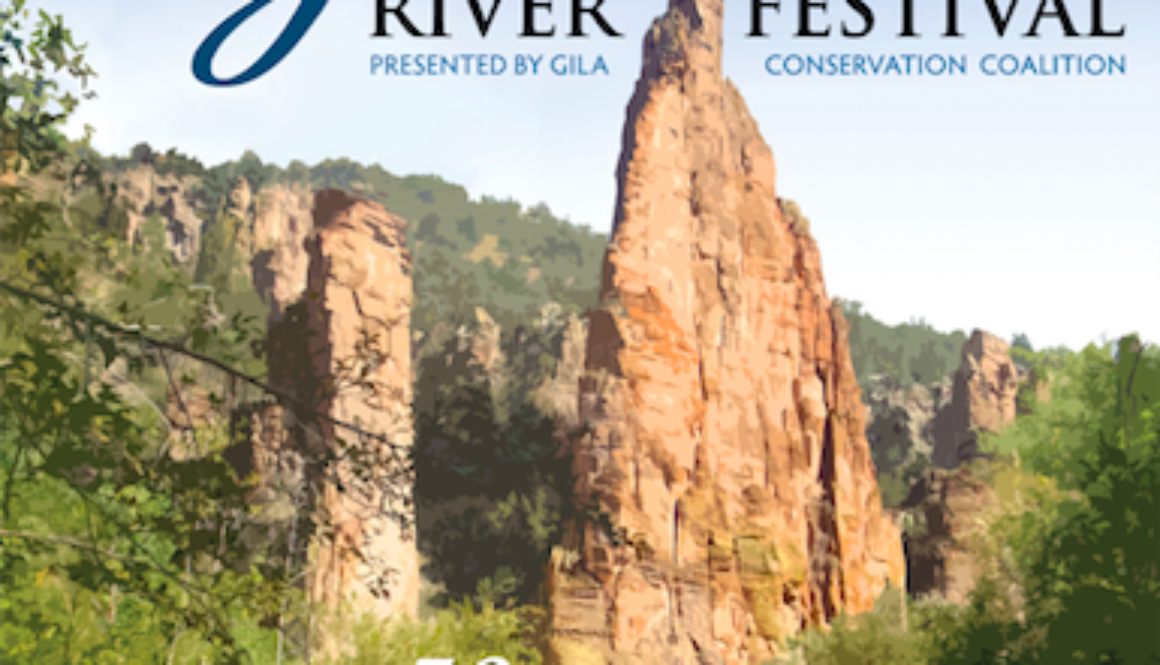
The Gila Conservation Coalition hosts the 14th annual Gila River Festival “Celebrating 50 Years of Wild & Scenic Rivers” September 20-23, 2018 in Silver City, NM, the Gila National Forest and along the Gila River.
Rivers run through us-our hearts, our lives, and our history. As a nation, we recognize the value of rivers to our drinking water supplies, ecosystems, wildlife and recreation opportunities, engendering our strong sense of responsibility to protect them.
This year marks the 50th anniversary of the signing of the Wild and Scenic Rivers Act that established the National Wild and Scenic River System, protecting more than 12,000 miles of rivers in 40 states and Puerto Rico for recreation, fish and wildlife habitat, scenery, water quality, and cultural heritage.
At the 14th Annual Gila River Festival, we will celebrate this momentous legislation and explore long-term protection of the Gila River through Wild and Scenic River designation.
Speakers include Senator Tom Udall (invited), authors Tim Palmer, Phil Connors, Melissa Sevigny, and Dutch Salmon, filmmakers Tony Estrada and Sinjin Eberle, attorney Adrian Oglesby and river gurus Steve Harris and Dr. Denielle Perry.
Join us for a variety of field trips, presentations, dancing, and fun for the whole family!
Conservationists critical of latest plan for Gila River diversion
Proposal is ill conceived, ecologically harmful, expensive and unfair
July 20, 2018, Silver City, NM – On behalf of 37 local, state, and national conservation, sportsmen, faith, and outdoor recreation organizations, the Gila Conservation Coalition submitted today scoping comments on the ecologically harmful and costly Gila River diversion project.
The diversion proposal could significantly impact the Gila’s threatened and endangered species and riparian habitat, will cost several times more than the federal construction subsidy provided, and will unfairly withhold NM Unit Fund dollars from community water projects that could meet the water needs of 60,000 people in southwest New Mexico.
Proposed by the NM Central Arizona Project (CAP) Entity, a group of 14 representatives from local governments, community ditches, and soil and water conservation districts in southwest New Mexico that have responsibility for project design, the Gila diversion (NM Unit) proposal is facing a legal deadline under the Arizona Water Settlements Act (AWSA).
The Bureau of Reclamation and the New Mexico Interstate Stream Commission, joint leads for the formal review and approval process under the National Environmental Policy Act (NEPA), initiated preparation of an Environmental Impact Statement (EIS) for the Gila River diversion project on June 12. Public scoping comments are due today.
“It’s unfortunate that the NEPA process was started as the NM CAP Entity’s proposed action is poorly defined and continued to change even after the scoping period started. It’s been impossible to fully understand the specifics of the project. This lack of detailed information has made it difficult for the public to develop meaningful comments to inform the draft EIS,” stated Gila Conservation Coalition Executive Director Allyson Siwik.
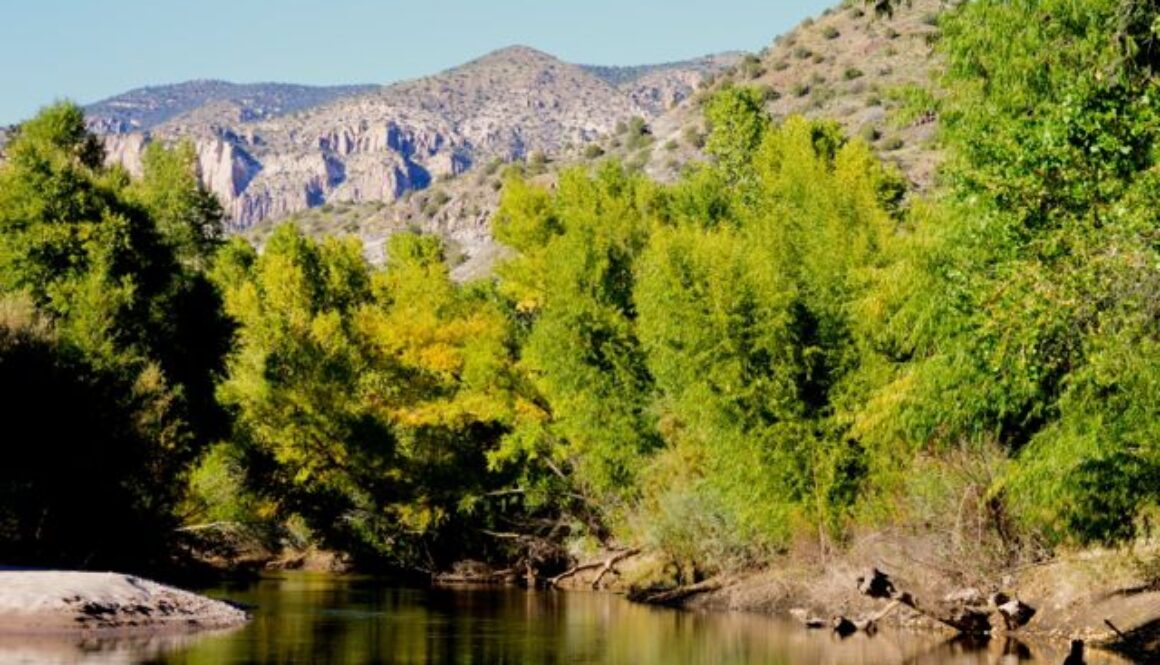
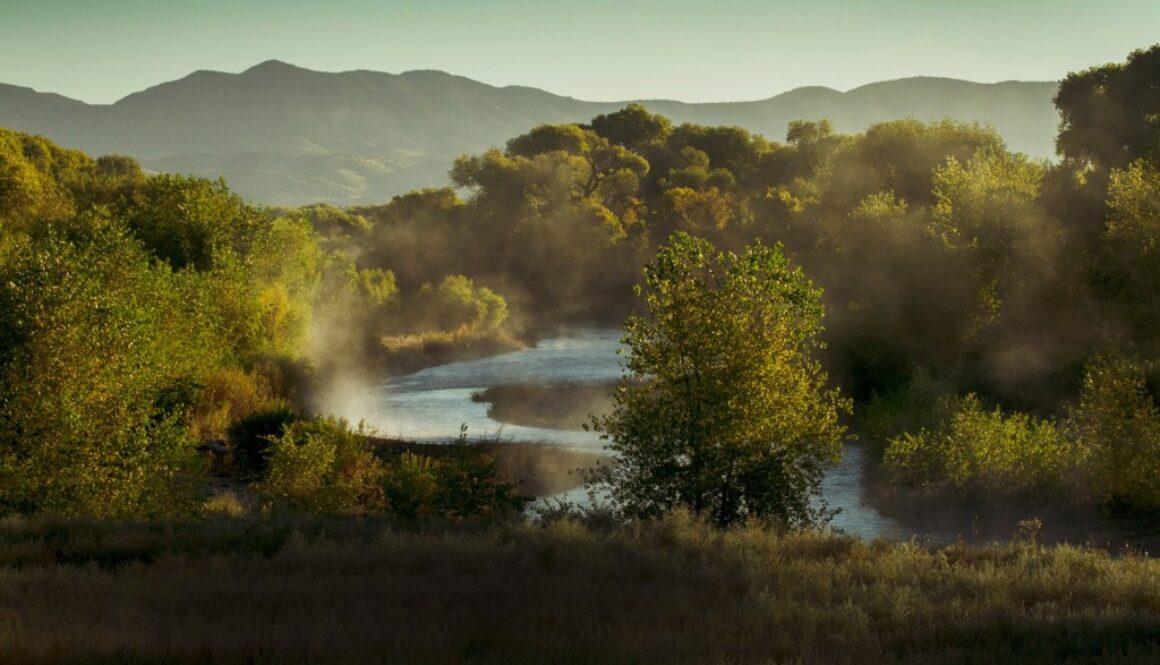
Flowing out of America’s first Wilderness Area, the Gila River is New Mexico’s last major undammed river. It’s home to seven threatened or endangered species, such as the loach minnow, spikedace, Southwestern willow flycatcher and yellow-billed cuckoo, and is proposed for long-term protection under the Wild and Scenic Rivers Act.
“Given that the diversion proposal is little better than a cartoon it’s hard to tell, but models show that this latest version of the diversion could actually increase drying of the river,” said Todd Schulke, co-founder of Center for Biological Diversity. “This could cause disappearance of riverside forests important to endangered birds and take away water from endangered fish that are on the cusp of extinction,” added Schulke.
After more than a decade of planning and expenditure of $15 million on studies, consultants and lawyers, the proposed diversion remains too expensive, unaffordable and unfair.
The federal subsidy available under the AWSA will not cover the full cost of the proposed diversion, leaving a gap of tens of millions of dollars for citizens to cover. Additionally, project water is too expensive for farmers to buy. Current ditch fees in the Cliff-Gila Valley are approximately $20 per acre. Project water cost will run at least $1,500 per acre per year, calling into question the project economics and the ability of farmers to pay for the new AWSA water.
“We are very concerned about the fundamental unfairness in how AWSA funds are being used. The proposed action will require spending all the available AWSA funds for a small amount of new irrigation water to benefit approximately 200 irrigators and Freeport-McMoRan. It is wrong to provide the world’s largest publicly traded copper company with this government subsidy that comes at the expense of water security for 60,000 people of southwest New Mexico. We can immediately spend AWSA funding on priority community water projects that will meet our water needs far into the future without building a costly Gila diversion that requires massive ongoing public subsidy to benefit a very few,” stated GCC’s Siwik.
The Gila Conservation Coalition’s scoping comments and exhibits can be downloaded from the following link: https://tinyurl.com/yd4sg2kx
The Bureau of Reclamation (BOR) and the New Mexico Interstate Stream Commission (ISC) have initiated preparation of an Environmental Impact Statement (EIS) for the Gila River diversion project (NM Unit) proposed by the NM Central Arizona Project (CAP) Entity. During the public scoping period scheduled for June 12 – July 20, 2018, the BOR and ISC are requesting public comment on the issues that should be analyzed in the NM Unit EIS.
Flowing out of America’s first Wilderness Area, the Gila River is New Mexico’s last major undammed river. It’s home to seven threatened or endangered species and is proposed for long-term protection under the Wild & Scenic Rivers Act.
The proposed NM Unit is expensive, unaffordable and unfair and will harm threatened and endangered species and riparian habitat along the Gila and San Francisco rivers. The NM CAP Entity’s intention to divert in the future the full 14,000 acre-feet per year under the AWSA is speculative and unnecessary.
Attend a rally in opposition to the Gila River diversion on July 2 at 5pm at the State Bar of NM at 5121 Masthead St. NE in Albuquerque. As part of the rally, please join us to make public comment at the scoping meeting from 4pm to 7 pm.
NO DAM DIVERSION RALLY – SILVER CITY
July 9, 2018; 3pm
Attend a rally in opposition to the Gila River diversion on July 9 at 3pm outside of the Grant County Veterans Memorial Business and Conference Center.
PUBLIC SCOPING MEETINGS
Albuquerque, NM: Monday, July 2, 2018, 4-7 PM
State Bar of New Mexico, Rodey Classroom
5121 Masthead St NE
Albuquerque, NM 87109
Chandler, AZ: Friday, July 6, 2018, 4-7 PM
Wild Horse Pass Hotel and Casino, Acacia CD Room
5040 Wild Horse Pass Blvd.
Chandler, AZ 85226
San Carlos, AZ: July 7, 2018, 1-4 PM
Apache Gold Casino Resort, Convention Center
777 Geronimo Springs Blvd Cutter Industrial Park
San Carlos, AZ 85550
Silver City, NM: July 9, 2018, 4-7 PM
Grant County Veterans Memorial Business and Conference Center, Multipurpose Room
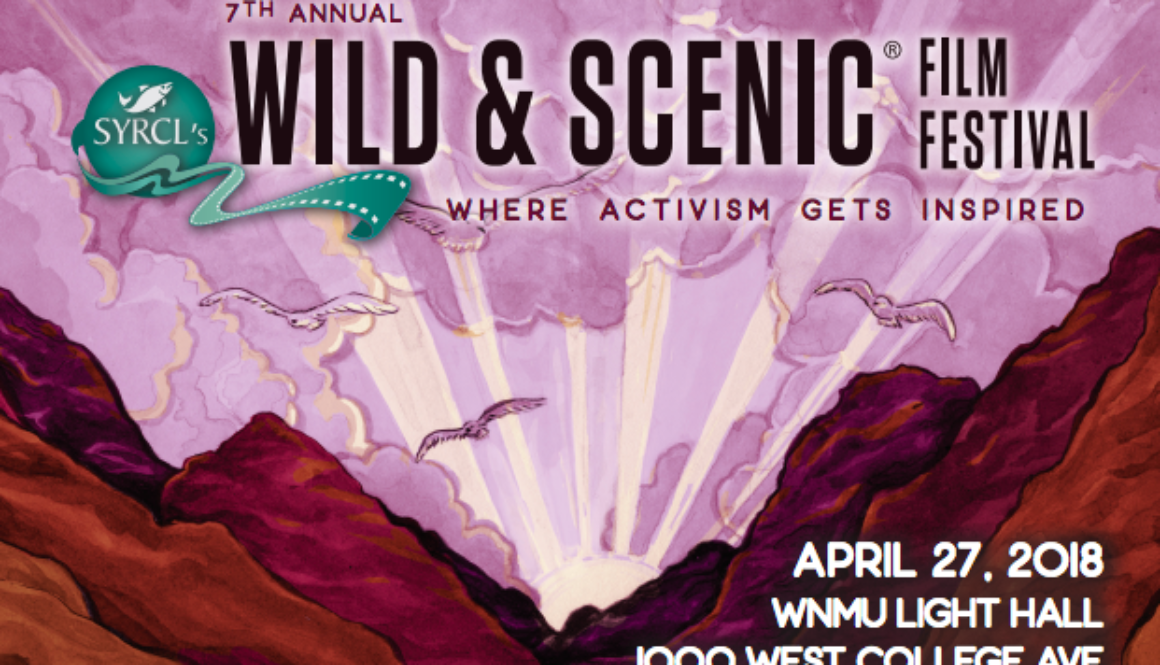
7th Annual Wild & Scenic Film Festival Scheduled for April 27th
Join the Gila Conservation Coalition for the 7th annual Wild & Scenic Film Festival at WNMU’s Light Hall on Friday, April 27th at 6:30 pm.
Silver City’s Wild & Scenic Film Festival is a collection of films from the annual festival that speak to the environmental concerns and celebrations of our planet. The four-day national event features over 100 award-winning films and welcomes over 100 guest speakers, celebrities, and activists who bring a human face to the environmental movement.
“The Wild & Scenic Film Festival is a natural extension of the Gila Conservation Coalition’s work to inspire people to act on behalf of the Gila River and its watershed,” says Allyson Siwik, Executive Director of the Gila Conservation Coalition. “The Wild & Scenic Film Festival shows us through film how communities like ours are working to protect their watersheds, unique landscapes, and the environment, galvanizing us to do the same.”
Featured at the tour event in Silver City will be Protected: a Wild and Scenic Portrait, which showcases river conservationist and author Tim Palmer as he shares the significance of national Wild and Scenic Rivers Act in protecting some of our nation’s iconic rivers.
In Wildlife and The Wall, filmmaker Ben Masters considers what effects building a border wall might have on wildlife, as the Rio Grande is the only water source in a harsh desert environment.
The festival will also premier an episode on New Mexico’s Continental Divide Trail from Season Five of Travels with Darley by the Emmy-nominated travel expert and author Darley Newman. Hike, mountain bike and raft along the Continental Divide Trail and Rio Chama in New Mexico in honor of the 50th Anniversary of the National Trails System and Wild and Scenic Rivers Act. The episode highlights Silver City, the Gila Cliff Dwellings, the Cosmic Campground and more.
Approximately ten other short films will be screened, with special guest appearances and prizes raffled throughout the evening, guided by Master of Ceremonies Kyle Johnson from Gila/Mimbres Community Radio. Mark your calendars – you don’t want to miss this!
With thanks to the National Partners of the Wild & Scenic Film Festival: Barefoot Wine & Bubbly, CLIF Bar, EarthJustice, Klean Kanteen, Peak Design, and Sierra Nevada Brewing Company.
A special thanks to our local sponsors:
Major sponsors: Western New Mexico University, Gila/Mimbres Community Radio, Continental Divide Trails Coalition, Center for Biological Diversity, Axle Canyon Preserve, Securing Economic and Energy Democracy (SEED) of Southwest New Mexico, New Mexico Wilderness Alliance, Bob Garrett & Mary Hotvedt, Gila Native Plant Society, Neal Apple & Vicki Allen, and Jane & Paul Riger
Sponsors: Syzygy Tileworks, TheraSpeech, Martha and Tom Cooper, Ron Parry, Great Old Broads for Wilderness, Southwest New Mexico Audubon Society, and David Cummings
EVENT DETAILS:
Date and Time: Doors open at 6:00 pm and show start at 6:30 pm
Venue Name and Address: WNMU’s Light Hall, 1000 West College Avenue
Ticket Prices: $15 at the door; GCC members $12; Admission + GCC membership $20; Students FREE
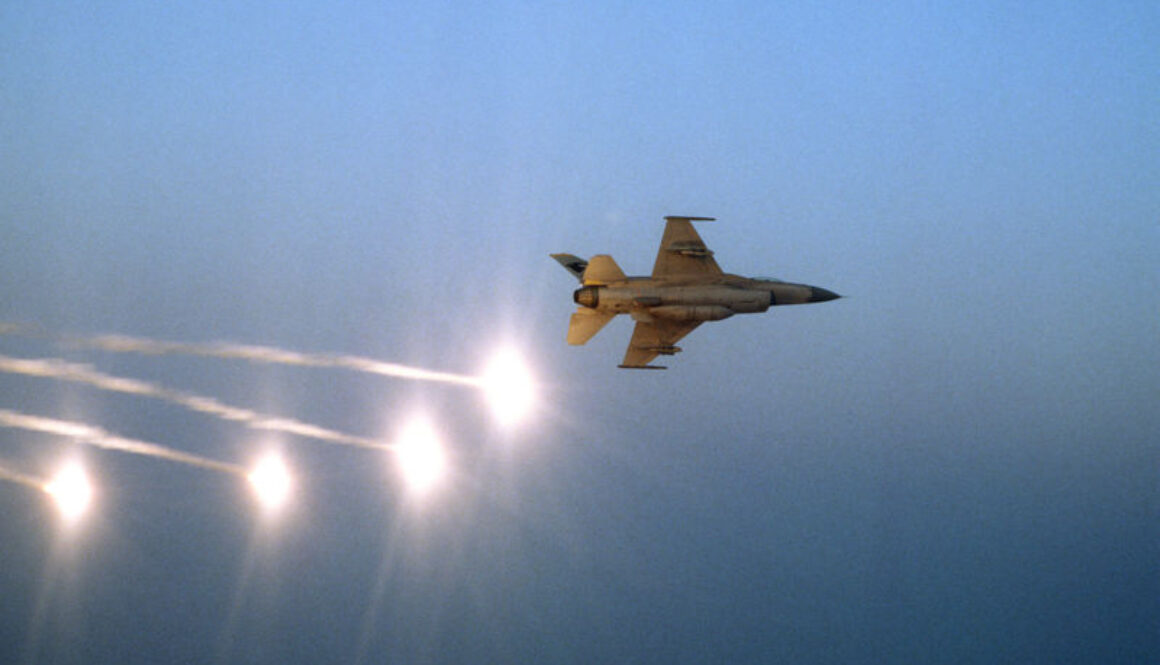
Holloman Air Force Base is considering expansion of its Special Use Airspace for training of F-16 fighter pilots over Silver City, the Gila National Forest and Gila and Aldo Leopold Wilderness Areas.
Encompassing the nation’s first wilderness area and New Mexico’s last wild river, the Gila Region attracts retirees, outdoor recreation and tourism from throughout the U.S. and internationally. Holloman’s proposed action will impact the environment and wildlife and significantly degrade the rural character and quiet solitude of this unique area, impacting real estate values, outdoor recreation, tourism, and the local economy. The Gila Region, Alternative #2, should not be considered a viable option for Special Use Airspace.
Take action to oppose Holloman flyover proposal at PeacefulGilaSkies.com
Holloman Air Force Base in Alamogordo is considering expanding its Special Use Airspace to train F-16 fighter pilots. One of the alternatives being considered, Alternative #2, is to create a new Military Operations Area outside of Silver City, including over the Gila National Forest and Gila Wilderness. The Air Force is proposing to fly 10,000 training sorties annually, including low-level flights at 500 ft above ground surface, as well as 1000 supersonic sorties. The F-16’s will also train with air defense systems that employ chaff and flares – as many as 30,000 annually.
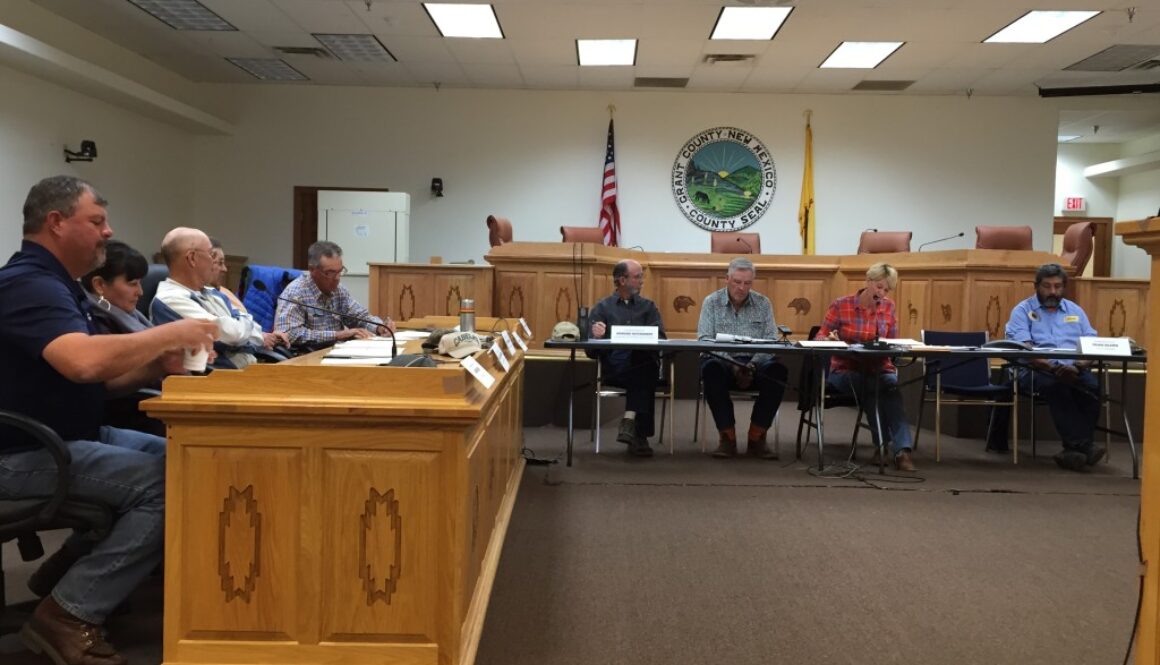
The Air Force did not hold a public meeting in Silver City or notify local elected officials about its proposal. Thanks to the public outcry and the efforts of local elected officials and conservation groups, the Air Force has agreed to attend a public meeting hosted by the Grant County Commission on Tuesday, Nov. 14th at 6pm at the Grant Co. Commission chambers. They will brief commissioners about the Holloman proposal and accept written public comment.
The human, wildlife and environmental impacts of this proposal could be severe. The extreme noise from low elevation overflights can be frightening and disruptive to humans and wildlife. Additionally, Holloman’s proposal requests use of chaff and flares (15,000 of each annually) for aircraft defense. These radar-disrupting systems introduce aluminum, plastic fibers and magnesium into the environment, with potential impacts to water quality and wildlife and increased risk of wild fire.
Gila Collective Participates in Santa Fe Art Institute 2016 – 2017 Water Rights Residency
In August 2017, the Gila Collective participated in the Water Rights Residency Program of the Santa Fe Art Institute (SFAI) for 2016 – 2017. The four-person team, comprised of painter and video artist Peter Bill, new media artist Stephen Dirkes, potter and animator Kate Brown, and Gila Conservation Coalition executive director Allyson Siwik, will explore the idea of equity in our water systems.
According to SFAI, the residency program “encourages creative minds to come together and examine the territory of Water Rights. Together, we will explore several questions: How do we describe and define the contested space around water? If water use is often parallel to culture, how can cultural activities result in greater models of equity in our water systems? How can diverse practices, from poetic to practical to political, create greater access to these and other parallel resources?”
Responding to the Water Rights Residency theme, the Gila Collective’s project asks: if we were to give voice to the voiceless – rivers, non-human organisms, future generations, our cultural heritage, and disempowered indigenous and low-income communities – what would those voices tell us about water? The project intends to reconnect people to water as the source of life through an immersive video experience that uses all of the senses to engage participants in this exploration by questioning our relationship to water and encouraging us to move toward an equitable sharing of our scarce water resources.
“Through our art, we’re trying to get people out of the hustle and bustle of every day life and to make them pause and think about what is happening in our world,” said Gila Collective member Peter Bill. “Are we leaving our grandchildren and great grand children enough water for the future? Are we putting systems in place that ensure that there are healthy rivers? Are we respecting the rights of indigenous and low-income communities and other species to have clean water in sufficient supply to survive? Our art will challenge our audience to answer these critical questions.”
The Gila Collective is comprised of four artists and activists who have worked individually and collectively to address issues of water use and misuse.
A painter and video artist, Peter Bill’s work both inspires and provokes. His murals and video works typically involve local communities in their conception and realization. Formerly Assistant Professor of New Media at Western New Mexico University, Bill has worked with street artists in Juarez to address border issues, and has brought their work to the U.S. to exhibit. The Gila River and the fight to protect it have been a focus of Bill’s collaborative work over the past three years and has included curating of the Gila River Three-Minute Film Fest, Gila Time-lapse Film Fest, Gila River Festival art exhibit, as well as creation of the video performance piece “Gila Immersion” and a number of short videos and documentaries.
Stephen Dirkes has been exploring multi-media/immersive/new media art for several decades.He has had extensive classical music composition study and currently works as a composer in New York City. After several years of composing for theatre, dance and film, he became involved with film making and narrative and non-narrative story telling. Dirkes has worked extensively with Peter Bill to explore aspects of landscape and nature in immersive art installation, exhibitions and films. Exploration that embraces traditional painting, time lapse, stop motion, still photography, scent, sound, music and film informs our artist language and broadens our reach of creative communication. In 2015, he founded an “art centric” perfume house, Euphorium Brooklyn, with the ambition of exploring olfaction to incorporate this powerful and enigmatic sense in his multi-media creations. Dirkes and Bill collaborated with the Gila Conservation Coalition to create “Gila Cycle – Tableaux Olfactif” multimedia installation that leverages creative expression to facilitate a “call to action” to protect the Gila River watershed.
Kate Brown is a master of slip-decorated, clear-glazed terra cotta ware, creating patterns that reflect her life in the foothills near the Gila wilderness: plants, animals, sky and human forms, bold and loose. During a sabbatical in 2001, she returned to school to study animation at Evergreen State College. To date she has created five animated short films: Ursa Dream, (2005) and HumanThing (2007), Fire Season (2013), First Light (2014), Gila River: Up Against the Wall (2015). She took possession of an antique Oxberry Animation Stand, and has spent the past five years on its restoration and updating. She creates under-the-camera, hand-made animations in her wilderness animation studio, Fundamentalist Flowerchild Productions.
Allyson Siwik is an environmental advocate based in Silver City, NM. Serving as the director of the Gila Resources Information Project and Gila Conservation Coalition, she works to protect groundwater from pollution caused by copper mining in Grant County and advocates for conservation of the Gila River, New Mexico’s last free-flowing river. A co-founder of the annual Gila River Festival, Siwik has collaborated with artists, writers, scientists, policy experts and activists to create events and experiences that provide opportunities for understanding and appreciating the importance of protecting our water resources and natural environment. Siwik has 25 years of experience in environmental protection, including 12 years with the US Environmental Protection Agency. She has worked extensively with communities locally, regionally and along the U.S.-Mexico border to identify and resolve environmental problems.
The Gila Collective presented its Water Rights Residency project, RIVER VOICE TIME, at the 13th Annual Gila River Festival in September 21 – 24, 2017.
The NM CAP Entity’s April meeting was full of finger pointing as it became apparent that the group’s Gila River diversion plans would be severely delayed due to another Open Meetings Act (OMA) misstep.
The Entity was to make a decision on a revised scope of work for the Interstate Stream Commission’s (ISC) consultant to conduct additional feasibility analyses for the Gila River diversion project. Because the meeting was not properly noticed to the public, the group was limited to discussion only. The error will prevent the Entity and the ISC from meeting an end-of-fiscal-year Department of Finance and Administration deadline for any contract changes. The ISC’s Kim Abeyta Martinez explained that this delay means that it would be late fall 2017 before the NM CAP Entity could expect to have results from the additional diversion feasibility analyses.
The ripple effect of this OMA mistake calls into question the ability of the Entity to meet the Arizona Water Settlements Act 2019 deadline for environmental compliance for the proposed diversion project. Considering that the group has not yet defined a feasible proposed action and the clock is running out, the NMCAPE should decide to reject the diversion and focus on funding non-diversion projects that can immediately meet southwest New Mexico’s water needs in a cost-effective manner.
The next NM CAP Entity meeting is scheduled for Tuesday, May 2nd, 9 am, Grant County Administration Building. Agenda is not yet available.
Santa Fe, NM –Senate Bill 340, sponsored by Senators Morales, Wirth and Rue, was temporarily tabled yesterday in the Senate Finance Committee. The bill would make further Interstate Stream Commission (ISC) spending for NM Unit permitting or implementation contingent upon providing the following information to the legislature: (1) demonstrate that the proposed NM Unit project is technically feasible, (2) quantify the amount of water the project could produce and who would use it, and (3) provide an engineering estimate of the project’s cost and a plan to pay for it.
“In its bill analysis and in repeated testimony, the ISC has asserted that the time it would take for the ISC to produce answers to the questions in SB 340 would cause New Mexico to miss the December 2019 federal deadline for a Gila Diversion project,” said Gila Conservation Coalition Executive Director Allyson Siwik. “In other words,” Ms. Siwik continued, “the ISC is admitting it cannot now answer the basic questions posed by the bill.”
“What this means is the ISC cannot show the current Gila Diversion proposal is technically feasible, how much water it could produce, who would use it, how much it would cost, and how they would pay for it,” stated Todd Schulke, Senior Staff for the Center for Biological Diversity. “This shocking admission calls into question the competence of the ISC and suggests the $6 million it has spent on studies and meetings has been wasted,” Mr. Schulke concluded.
Background
In February 23, 2017 testimony before the Senate Conservation Committee, former ISC Director Norm Gaume stated that the questions posed by SB 340 are elementary and should be the starting point for any water planning exercise.
The ISC and the NM CAP Entity (CAPE) have looked unsuccessfully for a viable diversion and storage project on the Gila River–despite spending over $11 million to date ($6 million for studies, meetings and non-diversion projects and the rest for permitting) of the federal money provided by the Arizona Water Settlements Act (AWSA). They have not yet estimated the yield of new water, a topic described by a May 2014 independent engineering review for the ISC as one of three “serious technical challenges or potential fatal flaws.” Worse, the ISC has given lip service to cost-effective non-diversion/conservation projects; they have given only small grants and hobbled almost all the projects with onerous matching fund requirements. Yet, the ISC has estimated that it will spend $20 million from the NM Unit Fund on NM Unit federal permitting.
State senators introduce NM Unit Fund Legislative Authorization Bill
SB340 holds Interstate Stream Commission accountable for wasteful spending
Santa Fe, NM –Senator Howie Morales (D, District 28), Senator Sander Rue (R, District 23) and Senate Majority Leader Peter Wirth (D, District 25) introduced Senate Bill 340 to require legislative oversight over the use of the NM Unit Fund and force the Interstate Stream Commission (ISC) to be accountable for wasteful spending on planning for a Gila River diversion project. The bipartisan bill will be heard first in the Senate Conservation Committee.
SB340 would require legislatively approved budgets for use of the NM Unit Fund and force the ISC to report the details of its actual and planned uses of the fund. To date, the ISC has spent $11 million fruitlessly in the absence of real legislative budget oversight.
Additionally, the bill would prohibit ISC expenditures from the NM Unit Fund on any diversion and storage project unless it had (1) determined the project is technically feasible; (2) determined how much water the project could produce and who would use it; and (3) produced an engineering estimate of the project’s cost and a plan to pay for it. Further, the UNM Bureau of Business and Economic Research (BBER) would have to issue a report supporting the financial implementation plan for a diversion project to go forward. Finally, each year the ISC would have to provide a detailed report on its spending from the past fiscal year and planned future spending.
“The legislature needs to exert its authority to appropriate funds from the NM Unit Fund and provide oversight to stop the ISC’s wasteful expenditures on a technically infeasible and unaffordable Gila River diversion,” said Allyson Siwik, Executive Director of the Gila Conservation Coalition.
“A water development project planning process normally defines a specific, feasible physical configuration of a water project, establishes the yield of project water, and states how the water will be used and what it will cost. It’s not reasonable for New Mexico to embark on engineering design and federal permitting estimated by the ISC to cost $20 million through FY2020 without first having determined these basic project planning attributes,” stated former Interstate Stream Commission director Norm Gaume.
“There is more than $40 million in the NM Unit Fund and it should instead be used to implement worthy infrastructure improvements and conservation projects, many of which are shovel-ready. Given our state’s dire financial situation, funding these projects could immediately create hundreds of jobs and economic benefits in southwestern New Mexico,” stated Siwik.
Background
In 2004 Congress passed the Arizona Water Settlements Act (AWSA), which authorizes diversion of the Gila River by the NM Unit if New Mexico agrees to pay for delivery of equal amounts of federal water to Arizona. The AWSA provides ten equal annual payments totaling $90 million dollars from the Bureau of Reclamation to the NM Unit Fund. These funds can pay for any water project that meets a water supply need in Catron, Grant, Hidalgo, and Luna Counties.
In November 2014, the Interstate Stream Commission (ISC) voted to notify the Secretary of the Interior that it intended to have the NM Unit constructed. New Mexico formed the NM CAP Entity (CAPE) comprised of 13 local entities in southwest New Mexico (and the ISC) and charged it with the responsibility of proposing a design for the NM Unit.
The ISC and the CAPE have looked unsuccessfully for a viable diversion and storage project on the Gila River–despite spending over $11 million to date of the federal money. They have not yet estimated the yield of new water, a topic described by a May 2014 independent engineering review for the ISC as one of three “serious technical challenges or potential fatal flaws.” Worse, the ISC has given lip service to cost-effective non-diversion/conservation projects; they have given only small grants and hobbled almost all of the projects with onerous matching fund requirements. Yet, the ISC has estimated that it will spend $20 million from the NM Unit Fund on NM Unit federal permitting.
The legislature has the power to make appropriations from NM Unit Fund and it must provide legislative oversight to rein in the ISC’s wasteful spending.
In May 2014 three young environmentalists gave their lives working to protect New Mexico’s Gila Wilderness and save the wild river that runs through it. A website has been set up to raise funds for a film project that portrays the living Gila River while telling the stories of the Ella Kirk, Michael Mahl and Ella Myers through the allegorical lens of the river that they loved.
If you’d like to help fund this documentary film project, visit the Heart of the Gila page here.