Final Value Study Confirms Gila Diversion Billion Dollar Boondoggle
Fatally Flawed Project Still on the Table
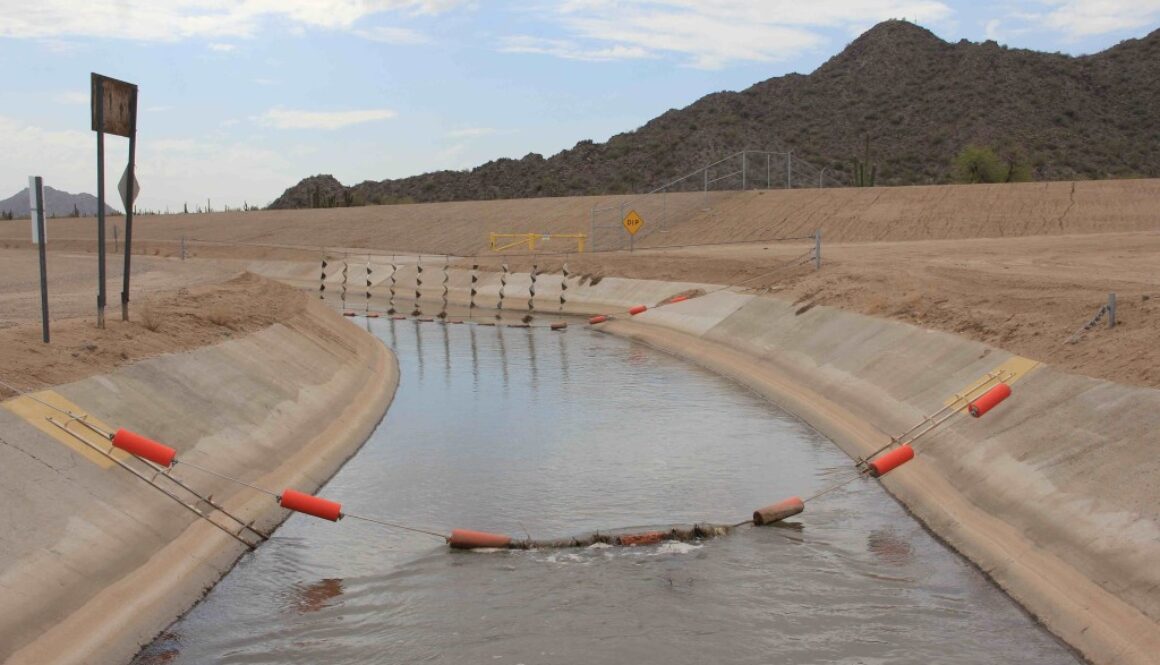
Silver City, NM — The Bureau of Reclamation released its final Value Planning Study that provides preliminary cost estimates of alternatives for a Gila River diversion project. The final report confirmed estimates that the Gila River diversion project is likely to cost $1B or more when including costs for operations and maintenance over the life of the project.
Despite a call by local water boosters to downsize diversion options and a demonstrated local reluctance to pay for a diversion, the ISC insisted all alternatives identified and evaluated in the Value Study would divert the maximum amount of water available under the Arizona Water Settlements Act (AWSA).
The Value Study made it clear that all alternatives evaluated included complete build out of diversion, conveyance and storage facilities in phases to deliver water over the Continental Divide to Deming and would require environmental analysis on the entire project. The Value Study alternatives all looked at phasing, with Phase 1 construction costs for most alternatives ranging from 2-4 times the funding currently available. The only Phase 1 alternative identified that could be paid for with existing funding was exposed as not meeting water storage targets and as having questionable functionality.
“There’s no free lunch here,” said Allyson Siwik, Gila Conservation Coalition Executive Director. “This huge fatally-flawed diversion project continues to be pushed forward with all the technical, financial, and environmental problems everyone has been talking about for more than a decade. And it’s clear that local communities in southwest New Mexico will have to pay for it. When will people wake up and see that we can’t afford this project?”
Former ISC director, Norm Gaume, has been critical of the Gila River diversion, citing several fatal flaws that make the project infeasible. Because of the tight constraints of the AWSA, water available for diversion could occur less frequently than 1 in 10 years. The NM Unit will be inordinately expensive due to construction of high capacity diversion facilities that will be infrequently utilized, the absence of suitable storage reservoir sites, and the distance of conveyance. Lining storage reservoirs to reduce seepage losses is required for the project to function, but will be hugely expensive and technically challenging given the large area and steep slopes. The cost of water to end users could be greater than $8000/acre-foot and municipal water rates in Deming could increase more than 10 times.
Once Secretary of the Interior Sally Jewell signs the NM Unit Agreement by November 23, the fatally flawed project will move into the next phase of design and planning under the National Environmental Policy Act.
Michael Berman Photography Studio Tour – 12 spaces available
TAKE A WALK ON THE WILD SIDE Keynote Address with Godfrey Reggio
Thursday, Sept. 24; 7:00 pm WNMU Light Hall. Doors open at 6:30 pm
$10 suggested donation at the door. Students FREE
Photo courtesy Braden King, 2014
World-renowned filmmaker Godfrey Reggio, director of the groundbreaking ‘Qatsi Trilogy,’ will give the keynote address, entitled “Take a Walk on the Wild Side.” His premise is that we don’t merely use technology: we live it. Einstein said, “The fish will be the last to know water,” and we will be the last to know technology. After Reggio’s keynote, the first film in his trilogy, Koyaanisqatsi, will be screened along with a selection of short films from the Gila Time-lapse Film Fest.
THINKING LIKE A WATERSHED
Panel Discussion with Jack Loeffler, Dr. Rina Swentzell, Dr. Enrique Lamadrid & Steve Harris
Friday, September 25, 7:00 pm, WNMU’s Light Hall
Admission: $10 suggested donation at the door. Students FREE.
Writer, aural-historian, and conservationist Jack Loeffler will lead “Thinking Like a Watershed,” a panel discussion with Dr. Rina Swentzell, who will represent the Puebloan sense of coherence, Dr. Enrique Lamadrid, an authority on the history of acequias, and Steve Harris, director of Rio Grande Restoration and proprietor of Far Flung Adventures. Godfrey Reggio’s second Qatsi film, Powaqqatsi, and selections from the Gila Time-lapse Film Fest will be screened following the panel discussion.
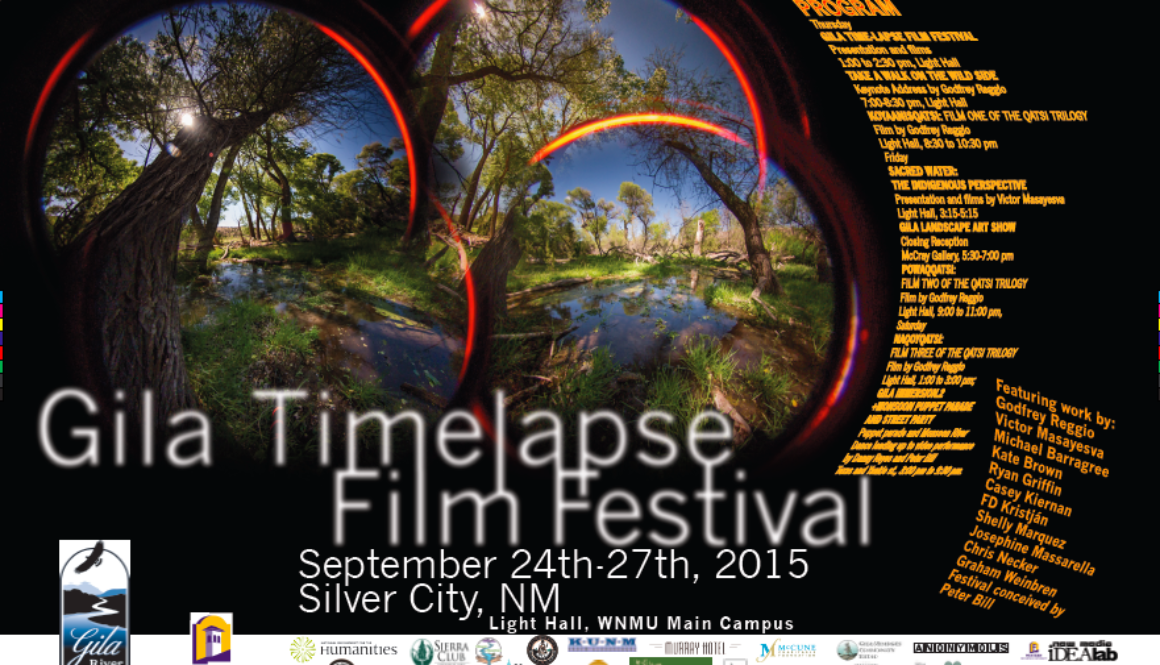
The Gila Time-lapse Film Festival will explore man’s relationship to nature and technology. Films from around the world and the southwest will be screened, such as Desert Flower, filmed in Joshua Tree National Park by Casey Kiernan, Jewel of the Dolomites filmed in northern Italy by Christin Necker, and Light Study from Canada by Josephine Massarella. Peter Bill, WNMU professor of New Media and director of the film festival, will kick off the inaugural event with a discussion about time-lapse film making on Thursday afternoon at 1pm. The film fest closes with a street party and 4-story projections of time-lapse films on the Murray Hotel.
MONSOON PUPPET PARADE, SKIT & STREET PARTY with Monsoon Puppet Theater, Gila Time-lapse Film Fest, & Music by The Roadrunners, Bayou Seco, and No Dam Diversions
Join the zany and creative forces of the Monsoon Puppet Theater and Bikeworks for a family-friendly parade full of fun costumes, music, dance, and giant puppets! Follow the parade to the Street Party at Yankie & Texas for dancing, food, and kids’ activities.
3:00-4:00 Face painting and mask making at Bikeworks @ Bullard & College
4:00-4:15 Puppet & bike parade from Bikeworks to Yankie & Texas streets
4:15-7:45 Street Party with lots of kids’ activities; Live Music and dancing with No Dam Diversions, Bayou Seco, and The Road Runners; wood oven-fired pizza, popcorn, & more.
7:45-9:30 Monsoon Puppet Skit, Gila Time-lapse Film Fest and projections on Murray Hotel
LANDSCAPE OF THE GILA ART SHOW
Throughout the festival, WNMU Francis McCray Gallery, noon to 5:00 pm
This Gila-inspired show features the work of local artists, as they interpret the Gila River in different media. Artists include Linda S. Boatwright, Kate Brown, Lois Duffy, Penny Flick, Donna Foley, Karyn Neil, Pierre Nichols, Jim Pendergast, Aleada Siragusa, Patricia Taber, Peter Bill and Stephen Dirkes. Visit the show during the Gila River Festival, September 24 thru September 27, from noon to 5:00 pm. On Friday from 5:30 to 7:00 pm, join us for a reception at the gallery.
Named one of the “100 Best Art Towns in America,” Silver City has a vibrant art scene. Be sure to wander through downtown Silver City’s Arts & Cultural District and visit participating galleries, open throughout the festival.
WE ARE THE RIVER; THE RIVER IS US Meditations & Contemplations at the Gila River
Sunday, Sept. 27; 9:15 am to 1:00 pm
Meet at Silver City Visitors’ Center at 9:15 am to carpool to The Nature Conservancy’s Gila Farm, OR, meet at the Gila Farm at 10:00 am. FREE
We close the Gila River Festival with a series of meditations and contemplations – some moving, some in stillness. Martha Everett, Becky Glenn, and Jeff Goin will, respectively, take us through short practices of Qigong, Yoga, and meditation with which we can establish a more subtle, deeper, and meaningful relationship with our natural world in general, and the Gila River in particular. No previous experience in Yoga, meditation, or Qigong is necessary. To create a sacred space, Vicki Allen will lead us in a short, meaningful ritual at the start of our session and will close it again at the end.
NM CAP Entity’s Financial Capacity Called into Question as Deadline Looms
Parties discuss supplemental terms to NM Unit Agreement
September 14, 2015
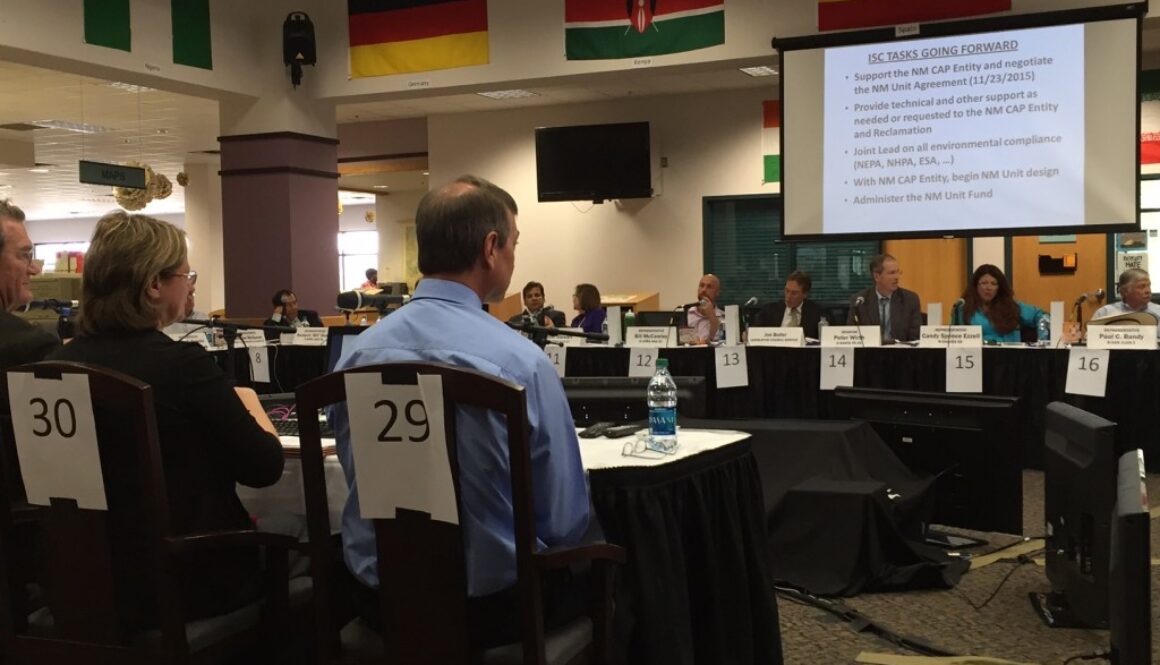
Given concerns over financing of the Gila diversion, the Bureau of Reclamation has requested that the NM Unit Agreement be amended to include “supplemental terms” to clarify legal and financial roles and responsibilities between the federal government and the NM CAP Entity for the planning, construction and operation of the NM Unit. The supplemental terms outlined by the Bureau of Reclamation at a recent legislative committee meeting provide the Department of Interior with legal protections and assurances related to the NM CAP Entity’s financial capability to carry out its responsibilities for the NM Unit, environmental compliance and NM Unit design and operational standards.
The NM Unit Agreement must be signed by the NM CAP Entity and the Secretary of the Interior by November 23, 2015. As of press time, the parties are still negotiating the amendments.
Locals Don’t Want to Pay the $1B+ Price Tag for the Gila Diversion
Problems surfaced quickly this past summer during the negotiations of the Joint Powers Agreement (JPA) that formed the NM CAP (Central Arizona Project) Entity. The Entity wants full responsibility to design, construct, operate and maintain the NM Unit. However, because local parties to the JPA did not want to commit to funding the Gila River diversion, they required language that would allow a CAP Entity member to withdraw from the JPA at any time.
The Entity is comprised of 13 local governmental organizations (Grant, Luna, Hidalgo, Catron counties; Deming, Lordsburg and Santa Clara; four irrigation ditch associations; and two soil and water conservation districts) and the New Mexico Interstate Stream Commission. Silver City, Bayard and Columbus opted to not join the NM CAP Entity.
In response, the NM Interstate Stream Commission (ISC), the lead state agency charged with implementing the Arizona Water Settlements Act (AWSA) in New Mexico, made it clear that water users must pay for the NM Unit and that the state and ISC are not on the hook for any funding beyond the AWSA subsidy funds. This means that locals would be responsible for the $900M+ shortfall in costs.
Feds Won’t Be the Gila Diversion Sugar Daddy
The Bureau of Reclamation on behalf of the Department of Interior (DOI) provided “full disclosure” to the NM CAP Entity through its supplemental terms that the federal government won’t pay for the Gila diversion beyond the AWSA subsidy of $66M and explained that the availability of the second increment of $36M is very uncertain and the third increment of $28M highly unlikely. Because the DOI must comply with the Anti-Deficiency Act when implementing the NM Unit, the federal government would not be able to initiate construction of the NM Unit unless full funding is committed.
Additionally, BOR is concerned that the JPA calls into question that the CAP Entity has the capability of fulfilling the requirements of the AWSA. The Secretary of Interior in response reserves her right to come back to the table if there are any changes with the composition or roles/responsibilities of the Entity.
Some of the other terms on the laundry list clarify that the NM Unit must be designed, built and operated in compliance with BOR standards and that a separate Memorandum of Agreement will be required to lay out roles and responsibilities with respect to environmental compliance.
Next Steps
If supplemental terms are agreed to, the NM Unit Agreement will have to be approved by each of the governmental organizations party to the NM CAP Entity. Stay tuned for meeting dates and times so that you can lend your voice to that process.
Thursday, September 24 – Gila Time-lapse Film Fest
1:00 pm – 2:30 pm WNMU Light Hall; $5 donation at the door; Students free
Timelapse films allow our human perceptions to stretch as we observe changes on the land that we otherwise would not as we go about our quotidian pursuits. We find timelapse films to be instructive and fulfilling because they can compress a day, a month, a year into a short burst of film that we can perceive in an instant. Time-lapses show us that the world at different timescales is very strange, and much different than our everyday experience: it’s vibrating, buzzing, and moving. By viewing processes we take for granted at different timescales, we hope to change how we interact with the great natural forces that surround us, and find our society’s balance anew.
Join Peter Bill, artist, filmmaker, New Media Professor at Western New Mexico University, and the mastermind behind this film festival, as he talks about time-lapse filmmaking, its technical aspects, historical perspective, and zeitgeist behind time-lapse.
After his presentation, we’ll screen the time-lapse films selected for this festival.
Photo courtesy Braden King, 2014
Thursday, September 24 Take a Walk on the Wild Side, Keynote Address with Godfrey Reggio
7:00 pm – 8:30 pm; WNMU Light Hall; $10 suggested donation at the door; Students Free
Beyond solar panels, sustainable development.
We see the world through language. Should our languages no longer describe the world in which we live, then indeed, not only the blind cannot see. “The limits of my language mean the limits of my world.” (Wittgenstein)
The Homeric poems caution, “Fire, their brilliance, their flaw.” This arguably may now read: technology, their brilliance, their flaw. The incantations of modernity tell us technology is something we use, we’re in charge, it’s neutral. Or is it Mary Shelley’s, not Hollywood’s, Frankenstein? Technology is as ubiquitous as the air we breathe. We do not use technology, we live it. As the new and comprehensive host of life it is our environment, the new terra firma, the sun that never sets. Being sun gazers, we become blind to the world we live in. That most present is most unseen. As Einstein said, “The fish will be the last to know water,” as we shall be the last to know technology. Being sensate, we become our environment; we become what we see, hear, smell, touch and taste; we become technology.
Anything we could have said about the Divines, we now say about technology: it is remaking the world in its image and likeness. Its truth, the truth; its language, 0 1; its shibboleth, “Pray for more.” In this twilight of the real, adrift in the Cloud, we are all together, all at once the cyborgs of wonderland.
Being also so human an animal, we might consider to “Take a walk on the wild side.” Resist destiny. Act free in deed. Live in an uncreated future. Or, we continue on the path to wonderland, infested with -isms, tuned to destiny, the rooted future.
Godfrey Reggio is an inventor of a film style which creates poetic images of extraordinary emotional impact. He is prominent in the film world for his Qatsi trilogy, essays of visual images and sound which chronicle the destructive impact of the modern world on the environment. His other films include Songlines, Anima Mundi, Evidence, and Visitors.
Born in Louisiana, Reggio spent 14 years in a Roman Catholic religious order, living in community, dedicated to prayer, study, and teaching. Based in New Mexico during the sixties, he taught grade and secondary school and college, and co-founded Young Citizens for Action, a community organization project to help gang members. Following this, Reggio co-founded La Clinica de la Gente, a facility that provided medical care to 12,000 community members in Santa Fe, and La Gente, a community organizing project in northern New Mexico’s barrios. In the 1970s, he co-founded the non-profit Institute for Regional Education, and co-organized a multi-media public interest campaign on the invasion of privacy and the use of technology to control behavior.
KOYAANISQATSI: FILM ONE OF THE QATSI TRILOGY, Film by Godfrey Reggio
WNMU Light Hall, 8:30 to 10:30 pm, immediately following Godfrey Reggio’s keynote
Introduced with selections from the Gila Time-lapse Film Festival
$5 suggested donation at the door, Students FREE
Koyaanisqatsi, the first film of the Qatsi trilogy, is a Hopi word meaning “life out of balance.” Created between 1975 and 1982, the film is an apocalyptic vision of the collision of two different worlds: urban life and technology versus the environment. The haunting musical score was composed by Philip Glass.
Koyaanisqatsi attempts to reveal the beauty of the beast. We usually perceive our world, our way of living, as beautiful because there is nothing else to perceive. If one lives in this world, the globalized world of high technology, all one can see is one layer of commodity piled upon another. There seems to be no ability to see beyond, to see that we have encased ourselves in an artificial environment that has remarkably replaced the original: nature itself. We do not live with nature any longer; we live above it, off of it, as it were. Nature has become the resource to keep this artificial or new nature alive.
The meaning of Koyaanisqatsi is up to the viewer, as art has no intrinsic meaning. This is its power, its mystery, and hence, its attraction. It stimulates viewers to insert their own meaning and value. The film’s role is to provoke, to raise questions that only the audience can answer. This is the highest value of any work of art, not predetermined meaning, but meaning gleaned from the experience of the encounter.
FRIDAY, SEPTEMBER 25
Friday, September 25 – SACRED WATER: THE INDIGENOUS PERSPECTIVE Presentation and films by Victor Masayesva
3:15 to 5:15 pm, Light Hall, WNMU; $5 suggested donation at the door, Students Free
In this introduction to his films, Hopi filmmaker Victor Masayesva will speak about several converging topics: the spirituality of water, indigenous communities’ relationship to time, calendars, and environmental discord. He’ll speak to humane approaches to technology, with a keen awareness of their impacts on human societies, including the Hopi people.
Immediately after Masayesva’s talk, we’ll show three of his films.
Paatuwaqatsi – H2opi Run to Mexico (56 minutes)
Environment, culture, prayer and beliefs all converge in this meditative depiction of running. The sacred and the profane are bridged in the act of running in which individual expended energy merges with the natural world. Paatuwaqatsi is distinct from the typical gloomy representations of impoverished Native American communities. Inspiring and uplifting, it offers profound insights into traditional prayers for water in contemporary Native America.
Time Keepers – Calendario Desconocido (15 minutes)
With the ending of the great Maya Cycle and advent of the new, several indigenous communities have become more aware of traditional calendar and time keeping. With a feeling of urgency, they are watching the effects of climate and environmental upheavals within the context of their time keeping practices.
Color of Wilderness (20 minutes)
This film challenges the predominance of American conceptualization of wilderness, and presents diverse social perspectives on the meaning of wilderness for people of color. It’s a call to the public to become involved in the diversification and perpetuation of color in wilderness.
Hopi filmmaker Victor Masayesva has been honored with numerous awards, including the University of Arizona Distinguished Alumni Award, the Gold Hugo at Chicago Festival, Two Rivers Visionary Award, Taos Festival’s distinguished filmmaker award and others. He is at the forefront of experimental filmmaking in the Native American media community, and is a prominent advocate for the indigenous aesthetic from the international community.
Masayesva has curated programs and been a resident artist at several art centers, including the Museum of Modern Art and the Whitney Museum of America Art in New York, the Walker Art Center in Minneapolis, and the Art Institute of Chicago. He has been a guest artist and juror at film festivals in many countries, and his films are available in several languages. Masayesva continues to reside in the village of Hoatvela in Arizona.
POWAQQATSI: FILM TWO OF THE QATSI TRILOGY, Film by Godfrey Reggio
Light Hall, 9:00 to 11:00 pm, immediately following “Thinking Like a Watershed” panel
Introduced with selections from the Gila Time-lapse Film Festival
$5 suggested donation at the door, Students FREE.
The overall focus of Powaqqatsi, the second film in the Qatsi Trilogy, is on indigenous peoples of the Third World — the emerging, land-based cultures of Asia, India, Africa, the Middle East and South America — and how they express themselves through work and traditions. What it has to say about these cultures is an eyeful and then some, sculpted to allow for varied interpretations.
Where Koyaanisqatsi dealt with the imbalance between nature and modern society, Powaqqatsi is a celebration of the human-scale endeavor: the craftsmanship, spiritual worship, labor and creativity that defines a particular culture.
It’s also about contrasting ways of life, and in part how the lure of mechanization and technology and the growth of mega-cities are having a negative effect on small-scale cultures.
“Powaqqatsi” is a Hopi Indian conjunctive — the word “Powaqa,” which refers to a negative sorcerer who lives at the expense of others, and “Qatsi,” or life. Powaqqatsi, says director Godfrey Reggio, is not a film about what should or shouldn’t be, but rather “an impression, an examination of how life is changing…. What we sought to capture is our unanimity as a global culture.”
Powaqqatsi is a record of diversity and transformation, of cultures dying and prospering, of industry for its own sake and the fruits of individual labor, presented as an integrated human symphony, with Philip Glass’ score providing the counterpart, performed with native, classical and electronic instruments.
SATURDAY, SEPTEMBER 26
Saturday, September 26
NAQOYQATSI: FILM THREE OF THE QATSI TRILOGY – Film by Godfrey Reggio
Introduced with selections from the Gila Time-lapse Film Festival
WNMU Light Hall, 1:00 to 3:00 pm; $5 suggested donation at the door, Students FREE
More important than empires, more powerful than world religions, more decisive than great battles, more impactful than cataclysmic earth changes, Naqoyqatsi chronicles the most significant event of the last five thousand years: the transition from the natural milieu, old nature, to the “new” nature, the technological milieu.
Nature has held earthly unity through the mystery of diversity. New nature achieves this unity through the awesome power of technological homogenization.
Naqoyqatsi is a reflection on this singular event, where our subject is the medium itself, the wonderland of technology. The medium is our story. In this scenario human beings do not use technology as a tool (the popular point-of-view), but rather we live technology as a way of life. Technology is the big force and, like oxygen, it is always there, a necessity that we cannot live without, and it is consuming the finite world of nature. It is in this sense that technology is Naqoyqatsi, a sanctioned aggression against the force of life itself – war life.
Naqoyqatsi takes us on an epic journey into a land that is nowhere, yet everywhere, where the real gives way to the virtual. As the gods of old become dethroned, a new pantheon of light appears in the integrated circuit of the computer. Its truth becomes the truth.
GILA TIME-LAPSE FILM FEST 7:45pm – 9:30pm FREE
Intersection of Yankie and Texas Streets in downtown Silver City
Wait until dark for the Gila Time-lapse Film Festival to begin. We’ll project the selected short films on the side of the Murray Hotel. Peter Bill, film professor at Western New Mexico University, choreographs this street performance, with spontaneous trumpet riffs by Danny Reyes, composer and WNMU music professor. Winners of the film fest will also be announced.
New Mexico Legislators Skeptical of Gila Diversion Project Billion Dollar Costs Insurmountable
Silver City, NM – The New Mexico Legislature’s Interim Water and Natural Resources Committee heard testimony about the Gila River diversion project at its meeting in Silver City today and voiced overwhelming skepticism about the financial feasibility of the billion dollar project.
Darr Shannon, Hidalgo County Commissioner and New Mexico CAP Entity chairperson, said that she recognized the “huge” amount of money required to build a Gila River diversion and that her group does not know how it will fund the high cost to construct the project, but the NM CAP Entity is made up of members who are “independent thinkers” and “have passion” to determine how to build the project. She went on to say that NM CAP Entity members know how to use shovels and will figure out how to build the project.
“The Gila River diversion project won’t be built with a shovel and the NM CAP Entity’s passion won’t pay the billion dollar price tag,” stated Allyson Siwik, Executive Director of the Gila Conservation Coalition.
The Bureau of Reclamation recently facilitated for the NM Interstate Stream Commission (ISC) a Value Planning Study to develop alternatives for a Gila River diversion project. Despite a call by local water boosters to downsize diversion options and a demonstrated local reluctance to pay for a diversion, the ISC insisted all alternatives identified and evaluated would divert the maximum amount of water available under the Arizona Water Settlements Act (AWSA). The Value Planning Study confirmed estimates that the Gila River diversion project is likely to cost $1B or more when including costs for operations and maintenance over the life of the project.
The Value Study made it clear that all alternatives evaluated included complete build out of diversion, conveyance and storage facilities in phases to deliver water over the Continental Divide to Deming and would require environmental analysis on the entire project. The Value Study alternatives all looked at phasing, with Phase 1 construction costs for most alternatives ranging from 2-4 times the funding currently available. The only Phase 1 alternative identified that could be paid for with existing funding was exposed as not meeting water storage targets and as having questionable functionality.
Siwik continued, “There’s no free lunch here. The ISC continues to push for a huge fatally-flawed diversion with all the technical, financial, and environmental problems everyone has been talking about for more than a decade and they are insisting local communities in southwest New Mexico have to pay for it.”
Former ISC director, Norm Gaume, has been critical of the Gila River diversion, citing several fatal flaws that make the project infeasible. Gaume stated, “The proposed New Mexico Unit deserves the Legislature’s scrutiny and oversight. The ISC and its consultants, acting as the State of New Mexico, have spent millions to define a workable project but have met failure at every turn. That’s because a workable project is impossible, physically and financially. How long will the State of New Mexico continue to pretend otherwise?”
Because of the tight constraints of the AWSA, water available for diversion could occur less frequently than 1 in 10 years. The NM Unit will be inordinately expensive due to construction of high capacity diversion facilities that will be infrequently utilized, the absence of suitable storage reservoir sites, and the distance of conveyance. Lining storage reservoirs to reduce seepage losses is required for the project to function, but will be hugely expensive and technically challenging given the large area and steep slopes. The cost of water to end users could be greater than $8000/acre-foot and municipal water rates in Deming could increase more than 10 times.
The Gila Conservation Coalition needs volunteers for the upcoming Gila River Festival, and we invite you to participate. It’s easy, it’s fun, and we’ll even waive your registration fee for the event you volunteer for.
Volunteers are needed on field trips, at lectures and films at WNMU’s Light Hall, at the puppet parade and street party, and at other events.
If you’re interested in helping, please email volunteer coordinator Donna Stevens at director@ugwa.org or call her at 575.590.5698.
The 11th annual Gila River Festival – Finding Balance in a Changing World – planned in and around Silver City, September 24 – 27, 2015, will explore the inherent tension between modern society’s technological sophistication and our imperative to live within the bounds of the natural world. How do we balance humanity’s needs and desires while living within the confines of nature, and with respect for other living beings? What does our current imbalance mean for the Gila River and its watershed?
One of the Southwest’s premier nature festivals, the Gila River Festival attracts an audience of nature lovers and outdoor enthusiasts eager to learn about and experience the Gila’s natural wonders. Festival attendees will enjoy a variety of expert-guided field trips in the Gila National Forest and along the Gila River; a keynote talk by filmmaker Godfrey Reggio, director of the acclaimed film Koyaanisqatsi; Gila Time-lapse Film Fest; panel discussion by author and activist Jack Loeffler and guests; presentations by Norm Gaume, former director of the Interstate Stream Commission, engineer Mark Stone, climate scientist David Gutzler, and fish biologist David Propst; kayaking; puppet parade and street party, featuring live music by the Roadrunners and others; a downtown art walk; and more.
World-renowned filmmaker Godfrey Reggio, director of the groundbreaking ‘Qatsi Trilogy,’ will give the keynote address, entitled “Take a Walk on the Wild Side.” His premise is that we don’t merely use technology: we live it. Einstein said, “The fish will be the last to know water,” and we will be the last to know technology.
To complement Reggio’s keynote, the Gila Time-lapse Film Festival will explore man’s relationship to nature and technology. Reggio’s three Qatsi films– Koyaanisqatsi, Powaqqatsi, and Naqoyqatsi — will be screened along with films from around the world and the southwest. Desert Flower, filmed in Joshua Tree National Park, Jewel of the Dolomites filmed in northern Italy, and Light Study from Canada will be featured as part of the Gila Time-lapse Film Fest.
Hopi filmmaker Victor Masayesva will introduce three of his films: Paatuwaqatsi-H2opi Run to Mexico, Time Keepers-Calendario Desconocido, and Color of Wilderness. Guggenheim fellow Michael Berman will give a presentation on his photographic journeys in the wilderness, and also host a tour at his Mimbres photography studio.
Writer, aural-historian, and conservationist Jack Loeffler will lead “Thinking Like a Watershed,” a panel discussion with Dr. Rina Swentzell, who will represent the Puebloan sense of coherence, Dr. Enrique Lamadrid, an authority on the history of acequias, and Steve Harris, director of Rio Grande Restoration and proprietor of Far Flung Adventures. At a Saturday brunch, Jack Loeffler will regale us with stories about his decades-long friendship with the late writer Edward Abbey, “a gadfly with the wingspan of a buzzard.”
Free presentations on September 24 and 25 will impart information about different aspects of the Gila River. Water resources engineer Dr. Mark Stone will discuss how a diversion on the Gila River would affect the river’s healthy functioning, and fish biologist Dr. David Propst will talk about how the diversion would impact imperiled native fish populations. Dr. David Gutzler will present historical river flow data as compared to climate change predictions. Former Interstate Stream Commission director Norm Gaume will discuss not only the fatally flawed Gila River diversion, but also the common-sense opportunities for southwest New Mexico to meet its water needs. Fort Sill Apache leaders talk about their historic ties to the Gila River watershed.
Carrying on festival tradition, we will offer guided hikes such as birding, geology, native plants, Apache rock art, river changes, potential diversion sites, and more. Again this year, we’ll host the ever-popular Gila River kayak trip. The Monsoon Puppet Theater will lead another colorful Gila River Festival parade through downtown Silver City with handmade puppets and masks celebrating the Gila’s diversity of wildlife. The parade ends at Bullard and Yankie, where we’ll close the street for a party featuring kids’ activities, food, and music by Silver City’s own No Dam Diversions, Bayou Seco and Friends, and the Roadrunners. After dark, new media professor Peter Bill’s Gila Time-lapse Film Festival will project films onto the Murray Hotel, accompanied by street performers and musician Danny Reyes.
Other events include a bike tour of Silver City rainwater harvesting sites with restorationist Van Clothier; a fly fishing workshop led by Dutch Salmon of the Gila Conservation Coalition and Trout Unlimited’s Jason Amaro and Toner Mitchell. Art events include a self-guided tour of local galleries, and a reception for Gila River artwork at McCray Gallery. The festival concludes with contemplations and meditations at the river, facilitated by Lotus Center teachers.
Films from around the world and the southwest will be featured in the inaugural Gila Time-lapse Film Festival to be held September 24 – 27 in Silver City, New Mexico.
Desert Flower, filmed in Joshua Tree National Park, Jewel of the Dolomites filmed in northern Italy, and Light Study from Canada are just a few of the films to be screened.
The Gila Time-lapse Film Fest is part of the 11th Gila River Festival, a yearly event that celebrates the Gila River, New Mexico’s last wild river. Selected films will be screened throughout the four-day event.
Additionally, the Gila River Festival is pleased to announce that critically acclaimed film maker, Godfrey Reggio, will deliver the festival keynote address, entitled “Take a Walk on the Wild Side.” Reggio’s ‘Qatsi trilogy,’ and three short programs of selected time-lapse films submitted as part of the Gila Time-lapse Film Fest will also be shown.
Photo courtesy Braden King, 2014
Godfrey Reggio is an inventor of a film style that creates poetic images of extraordinary emotional impact. He is prominent in the film world for his ‘Qatsi Trilogy,’ essays of visual images and sound that chronicle the destructive impact of the modern world on the environment. His other films include Songlines, Anima Mundi, Evidence, and Visitors.
Born in Louisiana, Reggio spent 14 years in a Roman Catholic religious order, living in community, dedicated to prayer, study, and teaching, before spending the 1960s in New Mexico as a teacher and community organizer. In the 1970s, he co-founded the non-profit Institute for Regional Education, and co-organized a multi-media public interest campaign on the invasion of privacy and the use of technology to control behavior.
The Gila Time-lapse Film Fest will also feature Hopi filmmaker Victor Masayesva. In the introduction to his films, Paatuwaqatsi-H2opi Run to Mexico, Time Keepers-Calendario Desconocido, and Color of Wilderness, Masayesva will speak about several converging topics: the spirituality of water, indigenous communities’ relationship to time, calendars, and environmental discord. He’ll discuss humane approaches to technology, with a keen awareness of their impacts on human societies, including the Hopi people.
Masayesva has curated programs and been a resident artist at several art centers, including the Museum of Modern Art and the Whitney Museum of American Art in New York, the Walker Art Center in Minneapolis, and the Art Institute of Chicago. He has been a guest artist and juror at film festivals in many countries, and his films are available in several languages. Masayesva continues to reside in the village of Hoatvela in Arizona.
Time-lapse filmmaking has become quite popular in the past decade. In the early 1980’s, Godfrey Reggio’s “Koyaanisqatsi” introduced audiences to the intense satisfaction derived from the compression of time. Today, time-lapse films can be seen at the start of news broadcasts, the intro title sequences of films and TV shows such as House of Cards, and integrated into narrative and non-narrative works.
Time-lapse films allow our human perceptions to stretch as we observe changes on the land that we otherwise would not as we go about our quotidian pursuits. We find time-lapse films to be instructive and fulfilling because they can compress a day, a month, a year into a short burst of film that we can perceive in an instant. Time-lapses show us that the world at different timescales is very strange, and much different than our everyday experience: it’s vibrating, buzzing, and moving. By viewing processes we take for granted at different timescales, we hope to change how we interact with the great natural forces that surround us, and find our society’s balance anew.
The Gila Time-lapse Film Festival is directed by WNMU Professor of New Media Peter Bill, and will be hosted at Western New Mexico University’s new digital cinema, Light Hall. Peter has been shooting time-lapse films since living in Prague at the height of the Prague Spring of the ’90s. He moved into time-lapse filmmaking as he was a plein air painter, capturing the movement of light with his brush. Starting with super-8 film, and moving to digital means, Peter’s time-lapse films have exhibited internationally and won many awards.
The 11th annual Gila River Festival will explore the escalating tension between nature, man and rapid technological innovations. What does this mean for the future of the Gila River and its watershed?
Several events, beginning with film maker Godfrey Reggio’s keynote address about the relationships between man and his surroundings, will speak to the imbalance between society and nature. The Gila Time-Lapse Film Festival will feature films that compress or extend time, allowing us to perceive nature and technology in new ways.
In keeping with the theme of exploring ways to live in balance with nature, bio-regional aural historian Jack Loeffler will lead his panel discussion, “Thinking Like a Watershed,” featuring voices from different cultural perspectives.
As in previous years, the Gila River Festival will have expert-guided field trips, a Gila River kayak trip, a family-oriented puppet parade, and many more activities.
THANKS TO OUR SPONSORS WHO MAKE THE GILA RIVER FESTIVAL POSSIBLE!
Center for Biological Diversity ~ Dennis Weller Photography ~ Fort Sill Apache Tribe ~ Gila Haven ~ Gila/Mimbres Community Radio – KURU ~ Gila Native Plant Society ~ Heartpath – Meyoni ~ Heartwoods ~ KUNM ~ McCune Charitable Foundation ~ Murray Hotel ~ New Mexico Humanities Council & the National Endowment for the Humanities ~ New Mexico Wilderness Alliance ~ Pitchfork Ranch ~ Sandra & Glenn Griffin/Gila Tree Thinners ~ Stream Dynamics, Inc. ~ T & E, Inc. ~ Western New Mexico University New Media iDEA Lab
Sponsors
Ann McMahon Photography – www.AnnMcMahon.com ~ Axle Canyon Ecological Preserve – www.axlecanyon.com ~ Bob Garrett & Mary Hotvedt ~ Bob Wilson & Lisa Houston ~ Carol Morrison & Larry McLaud ~ Far Flung Adventures ~ Gila Wild Defense Fund ~ High ~ Shelby Hallmark & Lindee Lennox ~ Sierra Club Southern New Mexico Group ~ Single Socks – A Community Thrift Store ~ Southwestern New Mexico Audubon Society ~ Vicki Allen, LISW, Individual, Child and Couples Therapist ~ Western Institute for Lifelong Learning
Friends
Bob O’Keefe ~ Conservation Voters New Mexico Education Fund ~ Curious Kumquat ~ Desert Woman Botanicals ~ First New Mexico Bank ~ Gila Wild Defense Fund ~ Guadalupe’s ~ Mary Burton Riseley ~ Melvyn Gelb & Mary Ann Finn ~ Pauline & Richard Matthews ~ Prudential Silver City Properties ~ Regalos de la Tierra Pottery Co. ~ Richard Mahler, Relham LLC ~ Robert Pittman & Kathleen Wigley ~ Ron Henry ~ Ronald Parry ~ Silver City Food Co-op ~ Syzygy Tileworks ~ TheraSpeech ~ W. Jay Garard DDS
Grant County Commission Approves NM CAP Entity Joint Powers Agreement
JPA commits local communities to fund $1 billion Gila River diversion project
Silver City, NM – The Grant County Commission approved today the Joint Powers Agreement to form the NM CAP (Central Arizona Project) Entity that will be responsible for the design, construction, operation and maintenance of the billion-dollar Gila River diversion project.
Grant County commissioners committed to financing a $1 billion diversion project that is technically infeasible, is expensive and unaffordable, and is unnecessary given that non-diversion alternatives can reliably meet water supply needs at a small fraction of the cost of a diversion.
By signing onto the JPA, Grant County may issue bonds and levy taxes and user fees on water users to pay for the costs of the NM Unit. The Arizona Water Settlements Act subsidy of $100M won’t cover the full cost of the NM Unit, leaving a gap of $900+ million for taxpayers and water users to cover.
“It’s a travesty that the JPA commits county residents to building and financing a costly diversion project and explicitly prohibits funding of cost-effective non-diversion alternatives that can meet southwest New Mexico’s future water needs at a fraction of the cost of a diversion project,” stated Allyson Siwik, Executive Director of the Gila Conservation Coalition.
“This JPA takes AWSA funding away from community water projects that can benefit people throughout southwest New Mexico. AWSA funds could be used to fully fund diversion and ditch infrastructure improvements for irrigators on the Gila and San Francisco Rivers, funding municipal water projects like conservation, effluent reuse and water supply infrastructure improvements, and improving our watersheds through watershed restoration. These community water projects represent the common sense and responsible approach to meeting our future water needs.”