Watch GCC’s new video on efforts to save the Gila River on Vimeo!
A collaborative effort between GCC and the WNMU Expressive Arts Program documentary film class, The Gila River is in Our Hands explores the value of the wild Gila River, how it is currently threatened by powerful interests intent on diverting its waters, and how we can meet our future water needs while also protecting its free flow.
The Gila Conservation Coalition invites you to join us at the 4th Annual Wild & Scenic Film Festival on Saturday, June 7 at 6:30 pm at the Buckhorn Saloon and Opera House in Pinos Altos. The new Gila River CD/DVD set, with songs written and performed by local musicians and films about the Gila, will also be released at the event. Some of the featured musicians on the CD will perform their Gila River songs throughout the film fest. The CD/DVD set will also be available for purchase. Tickets are $12 at the door, GCC members $10, and students are free. A special price for admission plus a GCC membership will be offered for $20. All proceeds from the film fest and sales of the CD/DVD set will benefit the Gila Conservation Coalition’s work to protect the Gila River.
The Wild & Scenic Film Festival will feature films of wild rivers, misguided dam projects, and inspiring tales of activism around the globe. We have a great lineup, including funny and moving films, animated films, and two movies about the Gila’s larger basin, the Colorado.
One of the festival’s feature films, Damocracy debunks the myth of large-scale dams as clean energy and a solution to climate change.It records the priceless cultural and natural heritage the world will lose in the Amazon and Mesopotamia if two planned large-scale dams are built, Belo Monte dam in Brazil and Ilisu dam in Turkey. One of the latest animated shorts from Free Range Studios, The Story of Solutions, asks “what if the goal of our economy wasn’t more, but better? better health, better jobs and a better chance to survive on the planet?” You’ll enjoy spectacular imagery in such films as Paramos: Water for Life and I am Red.
Wild Gila: Forever Free is the title of the new CD/DVD compilation of original Gila River music and films produced by GCC to celebrate New Mexico’s last wild river. The CD features original songs performed by Charlie Alfero, Azaima B Anderson, Bayou Seco, Michael Cook, Andrew Dahl-Bredine, Peggy Hunter Edmister, The Fiddle Club, Gordee Headlee, Daniel La Brake, Wally Lawder, Ron McFarland, Paul Pino, Greg Renfro, Silver City String Beans and Barbie Williamson. The DVD includes films by the Gila Conservation Coalition, WNMU digital media professor and artist Peter Bill, and filmmaker Nat Stone.
Several musicians will appear live to perform their original songs throughout the film fest. Great prizes from national sponsors Patagonia, CLIF Bar, Osprey Packs, Sierra Nevada Brewing and Mother Jones will be awarded as part of the raffle, free with admission.
The Wild & Scenic Film Festival is a natural extension of the Gila Conservation Coalition’s work to inspire people to act on behalf of the Gila River and its watershed. Events such as GCC’s annual Gila River Festival are an opportunity for people to appreciate and understand the importance of New Mexico’s last free flowing river and to encourage them to work to preserve this incredible resource. The Wild & Scenic Film Festival shows us through film how communities like ours are working to protect their watersheds and unique landscapes.
The Wild & Scenic Film Festival was started by the watershed advocacy group, the South Yuba River Citizens League (SYRCL) in 2003. The festival’s namesake is in celebration of SYRCL’s landmark victory to receive “Wild & Scenic” status for 39 miles of the South Yuba River in 1999. The 3-day event features over 100 award-winning films and welcomes over 100 guest speakers, celebrities, and activists who bring a human face to the environmental movement. The home festival kicks-off the national tour to over 100 communities nationwide allowing SYRCL to share their success as an environmental group with others organizations. It is building a network of grassroots organizations connected by a common goal of using film to inspire activism.
With the support of their National Partners, Patagonia, CLIF Bar, Osprey Packs, Sierra Nevada Brewing and Mother Jones, the festival can reach an even larger audience in tour venues coast to coast.
A special thanks to our local sponsors: Gila/Mimbres Community Radio, Conservation By Design, Curious Kumquat, Cissy McAndrew – United Country Mimbres Realty, Gila Hike & Bike, Gila Native Plant Society, Gila Resources Information Project, Heartpath-Meyoni, Martha & Tom Cooper, Morning Star, New Mexico Wilderness Alliance, Silver City Food Co-op, Stream Dynamics, Syzygy Tile, TheraSpeech, Upper Gila Watershed Alliance, and Western Institute for Lifelong Learning
In testimony and a report presented to the Interstate Stream Commission at their monthly meeting in Tucumcari on April 30, former ISC director, Norm Gaume, told commissioners that the Gila River diversion proposal currently under consideration “would produce little or no water but with major waste of money, time and effort. A portion of the wild Gila River would be destroyed. More likely, many years, substantial human effort and millions of dollars would be wasted on the federal decision‐making process that ultimately would reach the same rational conclusion that the ISC should make before the end of 2014.”
Washington, D.C.- American Rivers named the Gila River among America’s Most Endangered Rivers® of 2014 today, shining a national spotlight on the threat that an expensive and unnecessary pipeline and diversion project poses to New Mexico’s last free-flowing river. “The America’s Most Endangered Rivers report is a call to action to save rivers that are at a critical tipping point,” said Matt Niemerski of American Rivers. “It makes no sense to build an expensive and harmful diversion on New Mexico’s last free-flowing river when quicker, easier, and cheaper water supply solutions exist.”
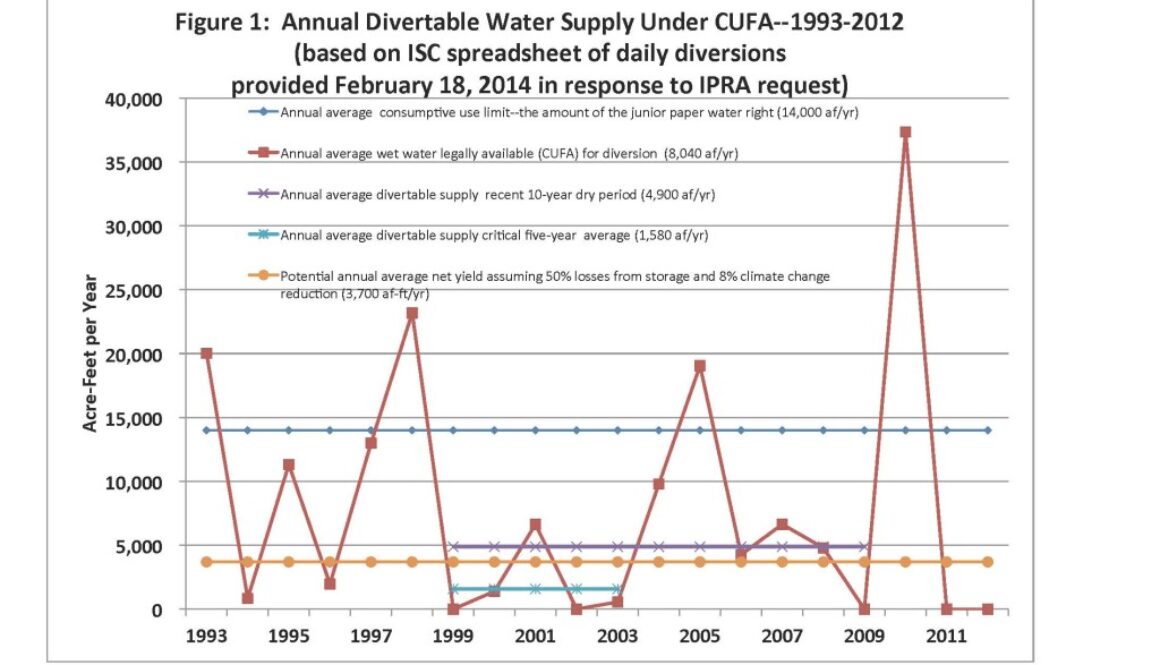
Under a provision of the Arizona Water Settlements Act, construction of a large diversion project is planned on the Gila River that would capture an average of 14,000 acre-feet of water annually, or double the current withdrawals, to increase crop production and urbanization. Fortunately, cheaper, more cost-effective water supply solutions exist, such as municipal and agricultural conservation, effluent reuse, sustainable use of existing groundwater supplies, and watershed restoration.
American Rivers and its partners called on New Mexico Governor Susana Martinez to protect the Gila River and ensure that her Interstate Stream Commission implements cheaper and more effective non-diversion alternatives to meet southwest New Mexico’s water supply needs.
“Expert analysis has shown that the ISC’s proposal is fatally flawed and will not work as currently conceived,” said Allyson Siwik, Executive Director of the Gila Conservation Coalition. “The good news is that southwestern New Mexico’s future water needs can be met through non-diversion conservation alternatives that can be easily funded with the federal funding available under the Arizona Water Settlements Act. These measures, such as municipal and agricultural conservation, effluent reuse, sustainable groundwater management, and watershed restoration, can generate three times the amount of water at a fraction of the cost of an expensive and harmful diversion project.”
“A diversion on the Gila would be devastating to New Mexico’s natural heritage,” said Beth Bardwell, Director of Freshwater Conservation for Audubon New Mexico. “What’s at stake is the largest stretch of cottonwood-willow riparian forest remaining in New Mexico, one of the highest concentrations of breeding birds in North America, and a living river that supports outdoor recreation and tourism for rural communities.”
“Governor Martinez and the Interstate Stream Commission should do the right thing and reject the Gila diversion,” said Jason Amaro, New Mexico Wildlife Federation board member. “We need to maintain and enhance the health of the Gila River, the foundation of hunting and fishing related opportunities in southwestern New Mexico. By supporting conservation alternatives to diversion, New Mexico can satisfy its water needs while protecting the quality of this premier outdoor recreation destination and supporting local economies dependent upon river-related recreation.”
When asked in a June 2013 poll which approach they would prefer to address the state’s water situation, New Mexico residents overwhelmingly supported conservation-based alternatives to diversions. Eighty-five percent of residents support using current water supplies more wisely, by continuing to conserve water, using new technology to help reduce wasted water, and increasing recycling of water.
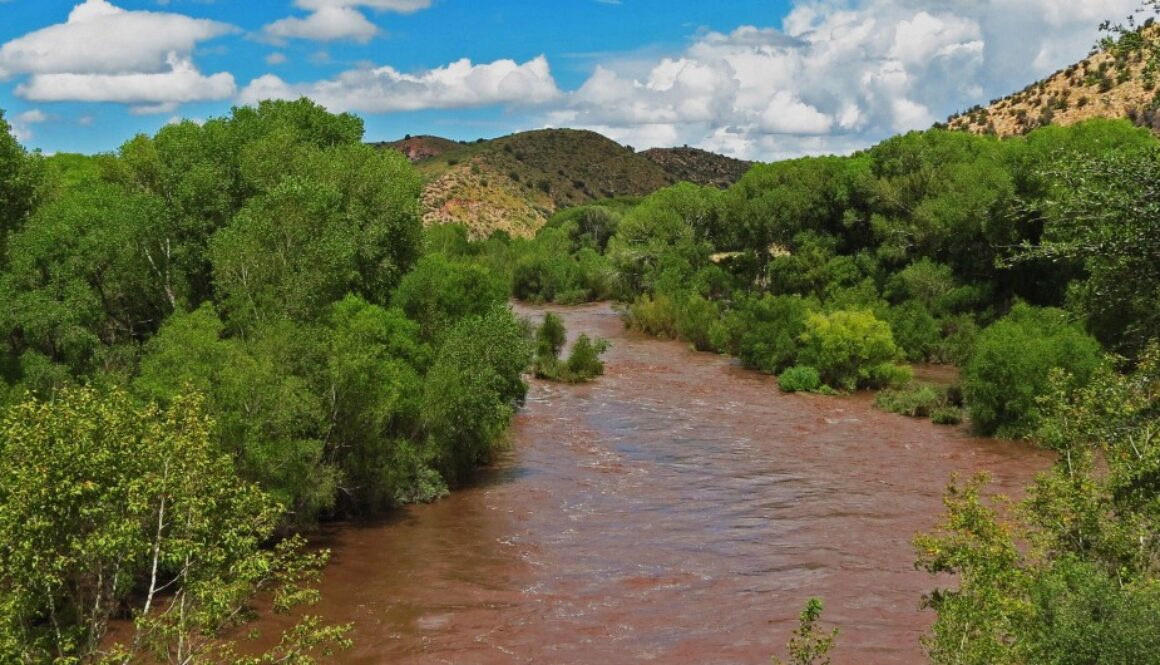
A tributary to the Colorado River, the Gila originates in America’s first designated wilderness area, the Gila Wilderness, and is rich in biological diversity and cultural history. The Gila River supports healthy riverside forests, cold water fisheries, and a remarkable abundance of wildlife. The river also provides significant economic value to the region with unparalleled opportunities for outdoor recreation, nature-based travel, and wilderness experience.
The annual America’s Most Endangered Rivers® report is a list of rivers at a crossroads, where key decisions in the coming months will determine the rivers’ fates. Over the years, the report has helped spur many successes, including the removal of outdated dams, the protection of rivers with Wild and Scenic designations, and the prevention of harmful development and pollution.
America’s Most Endangered Rivers® of 2014
#1 San Joaquin River (California)
Threat: Outdated water management and excessive diversions
#2 Upper Colorado River Basin (Colorado)
Threat: New trans-mountain water diversions
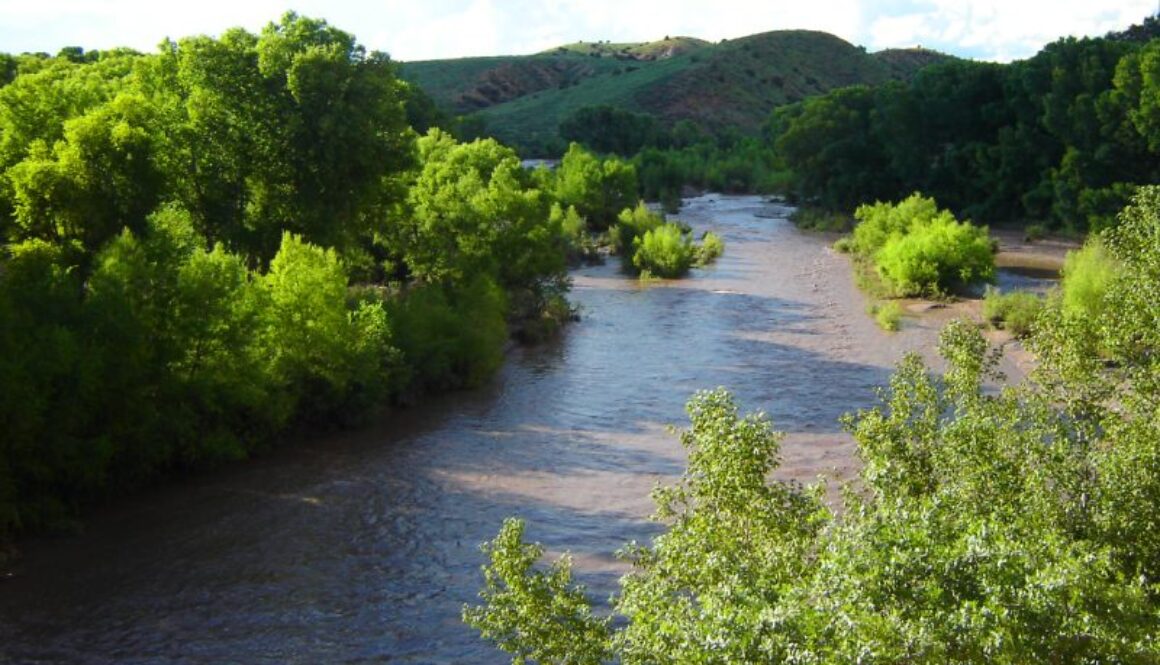
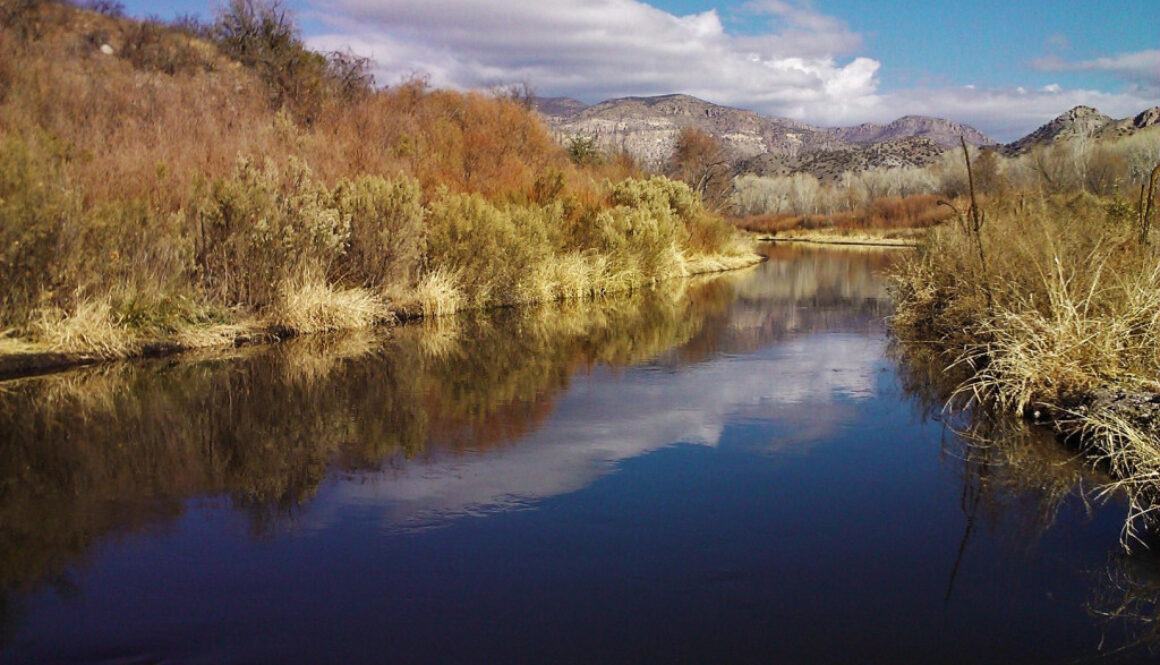
The Gila River is an amazing ecological treasure, supporting not only endangered fish, such as the loach minnow and spikedace, but more than 300 species of birds and wildlife, ranging from mountain lions to bighorn sheep to Mexican wolves.
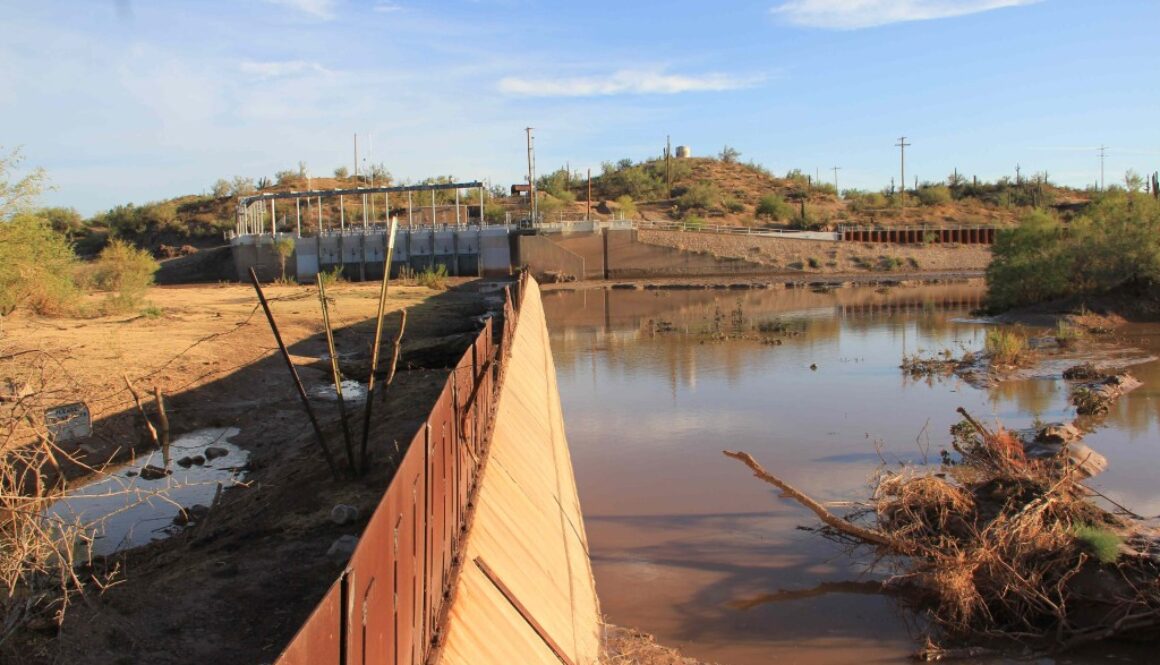
The New Mexico Interstate Stream Commission is considering diversion projects that would take Gila River water and pump it over the Continental Divide to urban areas, such as Deming and Las Cruces, for agricultural or municipal use.
This diversion is expensive, with estimated costs ranging from $300 to $500 million— $200 to $350 million of which would be shouldered by taxpayers and water users. In addition, New Mexicans would have to pay millions of dollars each year to Arizona to use Gila River water and to maintain the diversion, pipeline, and storage infrastructure.
The good news is that an expensive Gila River diversion is unnecessary. Southwest New Mexico’s water needs can be met cost effectively by using water more wisely through conservation measures, including municipal and agricultural conservation, sustainable groundwater management, water recycling, and waste water reduction.
Tell the Chairman of the New Mexico Interstate Stream Commission, Jim Dunlap, that water diversion projects are too costly for the environment and for taxpayers. New Mexico must embrace water conservation to meet future water needs and keep the Gila River flowing strong.
Former ISC Director says Gila River Diversion Fatally Flawed
Interstate Stream Commission admits no plan to address technical and cost issues
Santa Fe, NM – At a packed Senate Floor hearing in the New Mexico Legislature, the Senate Conservation Committee failed to advance Senate Bill 89 out of committee. SB89 “Unit Fund for Certain Water Supply Needs” would have directed the Interstate Stream Commission to spend no less than $82 million of the total amount distributed to the state under the Arizona Water Settlements Act on cost effective non-diversion alternatives to meet water supply demands in the southwest water planning region of New Mexico.
During the hearing, former Interstate Stream Commission director, Norm Gaume, stated that the ISC’s Gila River diversion is fatally flawed and likely to cost much more than current ISC cost estimates. He explained that due to the high amount of sediment in the Gila River, the current proposed design for conveyance of river water by gravity from the diversion through a 10-mile long pipeline is technically infeasible, as the pipeline would become clogged with large quantities of silt and require high cost pumps to clear out.
Gaume went on to point out that the amount of water from the proposed project will be significantly less due to the high evaporation and seepage losses from reservoirs constructed in broad sandy arroyos.
He stated that the diversion structure as currently designed is also technically flawed. “My opinion is ‘will the river obliterate it before it buries it or will it get buried first?’ It will not survive.”
Following Gaume’s testimony current ISC director, Estevan Lopez, admitted that the ISC’s current proposal wouldn’t address the fatal flaws identified by the former ISC director. “I don’t know how we will use the water and how we will pay for it. Norm could be right. [The actual cost] is way above the estimate.”
Not only is the proposed Gila River diversion likely to cost hundreds of millions of dollars more than current estimates, but the federal subsidy provided under the AWSA is likely to be significantly less. Senator Peter Wirth, co-sponsor of SB89, received clarification from the Bureau of Reclamation prior to the hearing that only a total of $100 million (2004 year dollars) is available to New Mexico given that interest in the Lower Colorado Basin Development Fund has been significantly less than 4%, the trigger for additional funds for a Gila River diversion project.
“We now know that we have an even smaller federal subsidy available for this project, increasing the cost that New Mexicans will have to shoulder if the state moves forward with a Gila River diversion,” said Allyson Siwik, director of the Gila Conservation Coalition. “New Mexicans will owe $200 million – $350 million more than is currently available. These numbers are likely to go up once the real costs are available.”
Critics of the proposed diversion, represented by over 100 members from 22 sportsman, business, faith-based, recreation, and conservation groups, made the charge that the project does not make any sense economically and will impact the recreation and tourism benefits supported by the Gila River, adding that there are cost effective non-diversion approaches to meeting the long-term water needs of southwestern New Mexico.
The Interstate Stream Commission is evaluating 3 diversion projects and 12 non-diversion projects. River advocates support the non-diversion projects that SB89 would have funded.
“With six months left before a preliminary decision, the ISC admitted they don’t currently have a plan to address the fatal flaws in the Gila diversion project. It’s reckless to commit tax payer dollars to a project that will not work,” said Siwik.
“Non-diversion alternatives produce more water for less money. We can use AWSA funding to meet our water needs immediately and save everyone time and financial resources on a project that won’t work and we can’t pay for,” said Siwik.
The proposal has been highly controversial since it’s inception due to the unique nature of the Gila River.
The Gila is New Mexico’s last wild river. It’s home to five endangered species,” said Todd Schulke, senior staffer with the Center for Biological Diversity. “It’s clear after yesterday’s hearing that the project is fatally flawed technically and economically and the ISC has no plan to fix these fatal flaws. This project is highly unlikely to ever get built,” added Schulke.
Santa Fe, NM – Senator Howie Morales (D-28-Catron, Grant & Socorro), Chair of the interim Economic and Rural Development Committee, announced his co-sponsorship today of two bills pre-filed by Senator Peter Wirth (D-25-Santa Fe), SB 89 and SB 90. The bills would protect taxpayers from a costly Gila River Diversion project while prioritizing conservation alternatives to secure Southwest New Mexico’s water supply.
Proposed Gila River diversion projects could cost more than $400 million, about half coming from federal funds and leaving New Mexico taxpayers responsible for the balance. The 2014 legislative session is the last opportunity for the Legislature to weigh in before the Interstate Stream Commission (ISC), a nine member body appointed by the governor, makes a final decision on behalf of the state.
“In my corner of the Land of Enchantment, the Gila River is the state’s last major free-flowing river. It draws in visitors and residents that support our local economy,” said Sen. Morales. “If we divert and transfer a significant amount of Gila water to other parts of the state for urban development, the economic and ecologic health of my district would be jeopardized now and in the future.”
According to Morales, $82 million in non-reimbursable federal funding available under the Arizona Water Settlements Act can secure more than 20,000 acre-feet of water through cost-effective measures, such as municipal conservation, agricultural conservation, watershed restoration, effluent reuse, and sustainable groundwater programs. This water can meet the needs of southwestern New Mexico far into the future.
“I stand with Senator Wirth in urging the New Mexico ISC and my fellow legislators to chart a different course for addressing New Mexico’s water supply issues,” continued Morales. “The fiscally responsible approach is to use the available federal subsidy to fund cheaper alternatives that can immediately meet the water needs of communities throughout southwest New Mexico.”
The legislation will ensure that the state budget will not be unduly impacted by a large scale diversion on the Gila River and allow for funding of southwestern New Mexico’s water supply through cost-effective alternatives to a diversion project.
Molly Mugglestone, Co-Director, Protect the Flows, 970-275-8909
Concern for Recreation & Tourism Economy Sparks Letter to Governor
NM business leaders see economic decline coming from controversial Gila River diversion under assessment
Albuquerque, NM – More than 300 New Mexico businesses, including the statewide NM Green Chamber, Las Cruces Green Chamber and Southwest NM Green chamber, sent a letter to Governor Susana Martinez today asking her to reject expensive and unpopular water diversion projects as she decides on best approaches to secure Southwestern New Mexico’s future water supply, and to strongly consider cost effective, common sense alternatives. The letter comes as the New Mexico Interstate Stream Commission (ISC) weighs options to divert water from the Gila River, a project permitted by the Arizona Water Settlements Act (AWSA) of 2004. ISC staff is expected to present preliminary results of analyses of Gila River diversion alternatives at a meeting in Santa Fe next week in preparation for the legislative session.
“The Gila is New Mexico’s last free-flowing river. The wildlife and fisheries that are supported by the river are coveted by sportsmen throughout the U.S.,” said Kurt Albershardt, owner of the Murray Hotel in Silver City. “The Gila Wilderness, kept vibrant by a healthy Gila River flowing through it, beckons hikers, birders, hunters and anglers and helps to support a $1.6 billion outdoor recreation economy based on the Colorado River’s four main tributaries in New Mexico. Diverting water from the Gila would harm wildlife, limit recreation opportunities and almost certainly wither an important part of our local economy.”
According to a 2012 report commissioned by business coalition Protect the Flows (which includes more than 200 New Mexico owned businesses), the Colorado River and its tributaries support a $26 billion river-related economy across six states, drawing revenue from more than 5 million adults who use the Colorado River system for recreational activities each year. From this, New Mexico enjoys $1.2 billion in direct spending on river recreation and fills 17,000 jobs. Seemingly simple outdoor activities like picnicking, trail activities, wildlife watching, camping, fishing, water sports, bicycling, snow sports, and hunting are major economic drivers that pour millions of dollars into New Mexico’s local businesses and state treasury. Southern New Mexico visitor spending is growing faster than in other parts of the state according to 2011 figures, with southwestern counties including Grant County generating from $34 to $61 million each. A significant portion of this bounty disappears should the Gila River, a major tributary of the Colorado, no longer flow free and attract recreation and tourism.
“A Gila River diversion is an incredibly costly enterprise, and for an exorbitant price tag of well over $300 million we will get only a short-term fix,” said Duane Mosley, Market Manager for the Las Cruces Farmers and Crafts Market. “After utilizing the money allotted for the project by AWSA, New Mexico taxpayers and water users are still stuck with a bill of approximately 200 million dollars. Adding in the annual operation and maintenance costs of a diversion will cost taxpayers another several million dollars per year.
A poll of New Mexico voters conducted by Republican polling firm Public Opinion Strategies in 2013 found that a majority of New Mexicans favor water conservation measures, with 85% believing that using water wisely — by continuing to conserve water, using new technology such as water-saving irrigation systems for farmers and ranchers to help reduce wasted water, replacing outdated water infrastructure, and increasing recycling of water – is preferable to diverting more water from New Mexico’s rivers to communities where more people live.
These public preferences are consistent with the December 2012 Colorado River Basin Water Supply and Demand Study, co-authored by the Bureau of Reclamation, the State of New Mexico and the other basin states, which concluded that conservation and water re-use are the cheapest and easiest solutions to implement as a means to balancing supply and demand on the river and its tributaries.
The poll also showed the great concern New Mexico voters have about water issues, specifically about the impact a Gila River diversion would have on wildlife and the health of the river. Overwhelmingly, 90% of New Mexicans feel that rivers are critical to their quality of life, 86% see rivers as critical to New Mexico’s outdoor recreation opportunities, and 85% feel that rivers are critical to the state’s economy.
“In the past 50 years, there have been three failed attempts to dam and divert the Gila, each attempt repelled by staunch opposition,” said Christie Baca, RDH at Divine Dental of Santa Fe. “Now we face yet another threat, and the reasons for previous resistance remain. We urge Governor Martinez and the ISC to ask themselves: Why impair a wild and free river that supports abundant wildlife and attracts outdoor recreationists spending time and money in New Mexico, when we can develop effective and cheaper non-diversion alternatives that would keep our Gila River flowing free?”
Aldo Leopold High School student Ella Kirk wants you to sign her petition to Governor Martinez to tell her to protect the Gila River, New Mexico’s last free-flowing river.
New Mexicans are very concerned about water issues in the state, including drought, water supplies and the health of our rivers. The long-term prognosis is grim. Our water management efforts will continue to be challenged by predicted water shortages compelling us to develop long-term strategies that use water more efficiently, while also preserving the health of our rivers that are critical to New Mexico’s quality of life, economy, wildlife and outdoor recreation opportunities.
The New Mexico Interstate Stream Commission, comprised of members appointed by Governor Susana Martinez, is currently considering diversion projects authorized and partially funded by the 2004 Arizona Water Settlements Act (AWSA) to take Gila River water and pump it over the Continental Divide to urban areas, such as Deming and Las Cruces for agricultural or municipal use.
A Gila River diversion is expensive with estimated costs over $300 million. Taxpayers and water users will have to pick up the tab for approximately $200 million not covered by the federal subsidy available under the AWSA. In addition, New Mexicans will have to pay millions of dollars each year to Arizona to use Gila River water and to maintain the diversion, pipeline, and storage infrastructure. During droughts, New Mexican may not be able to divert Gila River water if flows are too low.
The good news is an expensive Gila River diversion is unnecessary. Southwest New Mexico’s water needs can be met cost-effectively by using water more wisely through such measures as municipal and agricultural conservation, sustainable groundwater management, water recycling, and reducing wasted water.
Tell Governor Susana Martinez to support cost effective, non-diversion alternatives to meet southwest New Mexico’s future water needs. A Gila River diversion is expensive, will harm the health of the Gila River, its wildlife and fish, and will not solve the region’s long-term water needs.
This just in from Earth Matters, a program of Gila Mimbres Community Radio. Listen to Earth Matters’ 2014 NM Legislative Preview today!
The 2014 NM Legislative Session show includes interviews with Sierra Club lobbyist, Dan Lorimer and Todd Schulke of the Center for Biological Diversity. Allyson Siwik / Executive Director of both Gila Resources Information Project and Gila Conservation Coalition is your host.
This even-yeared session will last only 30 days and be focused primarily on budget issues but that doesn’t mean that contending forces within the legislature – and between the legislature and Governor Martinez – will not be vying to stake out new policy territory… particularly regarding water policy, infrastructure and the looming AWSA / Arizona Water Settlement Act. This session will be the last opportunity for the legislature to speak to the issue of AWSA before the state must declare its intent to pursue or forego a disastrous diversion of the Gila River to who knows who and who knows where to the tune of (so far) a cool $350 to $450 million dollars.
Earth Matters is GMCR’s 1st full length, locally produced and regularly scheduled program. This program is a collaborative effort between New Mexico Wilderness Alliance, Gila Resources Information Project and Upper Gila Watershed Alliance and addresses environmental issues at the local, national and international levels. Allyson Siwik – Executive Director of GRIP, Nathan Newcomer – Silver City Grassroots Organizer for NM Wild and Donna Stevens – Executive Director of UGWA, rotate as the hosts of the program.