By the 21st Century, you might think that every magical, special, ecologically-intact spot on this planet would long since be on the tourist trail, and maybe even find itself over-developed. Somehow, though, the mountains, streams and wildlife that make up the Gila ("hee-la") are still here to be explored, loved and protected (New York Times Article:
Walking a Dream of Desolation).
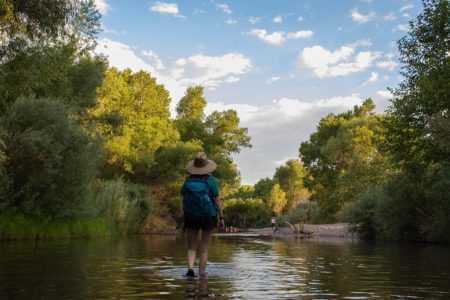
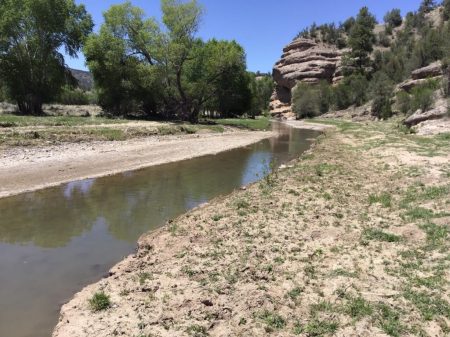
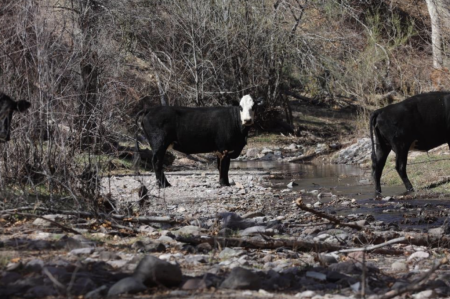
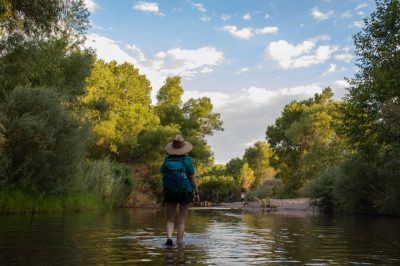
The Gila River carves its way 650 miles through America's first designated wilderness area. Hikers share backcountry with mountain lions, fox and lizards, coyotes, hawks, elk and bears. And the human past shouts its history in pictographs, cliff dwellings, and historic ranches.
Those
who explore the Gila River's wilderness watershed know that
the largely wild flow of the Gila River is literally the lifeblood
of this national treasure, and must be preserved for all time.
And,
indeed, vigilance is needed. The Gila River continues to be
threatened by water development projects. With good planning
and citizen involvement, New Mexico's last wild river can
be a magical and healthy ecosystem for our children to enjoy
for generations to come. Read more
What's New at GCC?
Arizona Water Settlements Act Update: Stakeholders Discuss Potential Projects under AWSA
Fall '09
In late November, stakeholders from throughout southwestern New Mexico submitted project ideas for consideration under the Arizona Water Settlements Act (AWSA) planning process. The on-going effort brings together stakeholders from throughout the region to determine how to utilize federal subsidy dollars and possibly Gila River water under the AWSA. Submission of projects was the latest step in the planning process that will assess the region’s future need for water and evaluate supply and demand management alternatives to meet that identified need.
Convening monthly since October of 2007, the group has made significant progress forward:
• Developed a Process Framework that outlines the AWSA planning process and guides the efforts of the Stakeholder Group;
• Identified Desired Future Conditions that reflect perceived problems related to water supply;
• Developed planning objectives;
• Completed a preliminary supply analysis;
• Compiled a catalog of existing technical information and reports;
• Held forums on economics and science to outline issues for analyses to be conducted through the planning process.
• Developed preliminary evaluation criteria to use in evaluating alternatives for their ability to meet identified needs.
Stakeholders met on December 16 to review and discuss submitted projects based on eight evaluation criteria, such as compliance with the AWSA, whether the project meets a water supply demand, economic viability, and political and public acceptance among others. The Gila Conservation Coalition submitted a set of projects for consideration that can meet the region’s future water supply while maintaining the instream flow of the Gila River. These non-diversion alternatives, such as municipal and agricultural conservation and sustainable groundwater development, meet the region’s needs at lowest cost and keep the Gila River intact.
There was much agreement on broad categories of projects such as agricultural and municipal conservation, infrastructure improvements, and watershed restoration as measured by the number of projects submitted by different stakeholders in these three categories. The Gila Basin Irrigation Commission was the only entity that submitted a project to build a Gila River diversion and offstream storage facility. There were also a couple proposals for mainstem dams on the Gila. Visit www.awsaplanning.com for the project descriptions.
No ranking of projects was done as originally envisioned as many of the project submittals did not provide sufficient information for evaluation. Moreover, without an understanding of supply and demand, it is premature to develop appropriate projects if the water supply need has not been characterized. A demand study is expected to be completed by June 30 and, in combination with the supply information, will allow for assessment of the region’s future water needs.
Stakeholders agreed to discuss at its next meeting related projects, outline possibilities for combining projects and identify missing information that is necessary for project evaluation.
Over the course of the next year, the planning process will compare projects and strategies and screen them to a shortened list of projects to be assessed in more detail. After more in-depth analysis, the group will identify a final set of projects and strategies that will move forward to the Interstate Stream Commission and Governor for consideration.
The next meeting of the AWSA Implementation/Technical Committee will be February 18 from 8:30 am – 4:00 pm at the Grant County Administration Building.
WILL presents
Arizona Water Settlements Act: The Basics.
February 18th, 6:30 - 8:30pm
Global Resource Center Auditorium, Silver City
A Free water issues forum open to the general public! The purpose of this event is to educate the general public about the AWSA, and get them more involved in the planning process. Water issues to be addressed are: 1) Why AWSA is important to residents of Grant, Hidalgo, Luna and Catron counties, 2) How citizens can get involved in the process, and why they should, 3) Where the AWSA stands now, and where it is headed.
Opening remarks by WILL President, Patty Reed and moderated by D. Matthew Runnels. For more information on the AWSA planning process or on WILL, visit www.awsaplanning.com or www.will-learning.com. Featured panelists representing diverse opinions, expertise and interests include: Peter T. White, Santa Fe Attorney and water issues expert; Charles “Tink” Jackson, Office of the New Mexico State Engineer; Allyson Siwik, Gila Conservation Coalition; Hugh B. McKeen, Glenwood Rancher and Catron County Commissioner; Anthony Gutierrez, Grant County Planner.
Free Flow: the Gila River in New Mexico Silver City Museum, 312 West Broadway St, Silver City
Ongoing into the Spring
This is an ongoing exhibit of photographs by Jan Haley. The exhibit travels to Silver City from the New Mexico Museum of Natural History in Albuquerque, and is presented in collaboration with The Nature Conservancy. “Free Flow” features some 40 photographs, following the Gila River from its headwaters on the western slope of the Continental Divide to the Arizona border. Maps and interpretive text, poetry by Carol Sinor, and a video component are also included in the exhibit. Haley’s photographs provide a comprehensive look at how the river has shaped the landscape and the wildlife that is nourished by it. Riverscapes, aerial views, and intimate close-ups illustrate the Gila’s journey from its high mountain source to the arid canyon lands where it leaves New Mexico. The images also appear in Haley’s book, Free Flow: The Gila River in New Mexico, published last year by University of New Mexico Press. Jan Haley, a Hillsboro resident, published her first book of photography, Max Evans’ Hi Lo Country: Under the One-Eyed Sky, in 2004. Copies of her Gila River book are available through the Museum Store.
5th Annual Gila River Festival a Success!
“Inspirational,” “fantastic,” “informative,” “awesome.” These were just some of the words used by participants to describe this year’s Gila River Festival. Throughout the 4-day event, more than 700 people attended lectures and an Aldo Leopold living history performance, participated in birding and natural history hikes and floated down the Gila in inflatable kayaks, a festival favorite. In honor of the 100th anniversary of Aldo Leopold’s legacy in the Southwest, the 5th Annual Gila River Festival celebrated the historical connection of Aldo Leopold, America’s most influential conservationist, to the Gila. New Mexico’s last wild river, the Gila, originates in the Gila Wilderness, the first wilderness area in the U.S., originally proposed by Aldo Leopold in 1921.
Want to share your Gila River Festival photos with others?Email them to us and we’ll post them in our photo gallery!
Mark your calendars – 6th Annual Gila River Festival September 16 -19, 2010
GCC wins 2009 River Warrior Award
Along with 30 other environmental groups and individuals, the Gila
Conservation Coalition won a 2009 River Warrior Award for its efforts over
the past 25 years to protect the Gila River, New Mexico's last free-flowing
river, from dams and diversions. The San Francisco-based nonprofit Resource
Renewal Institute sponsors the award with the hope of encouraging the
"valiant, resolute efforts in defending free flowing rivers and the wildlife
that depends on them; and in acknowledgement of the commitment, hard work,
and dedication of all who work for free flowing water." Read full press
release here.
Videos
Check out GCC's 25th anniversary video
"Saving the Gila: New Mexico's Last Wild River"
"Bottlenecks & Resilience" along the Gila River with Mike Fugagli
Gila River Among America’s Most Endangered Rivers Water Development Threatens New Mexico’s Last Free-flowing River
April 17, 2008; Silver City, NM – The Gila River, New Mexico’s last free-flowing river, has been named one of America’s Most Endangered Rivers, by the organization American Rivers. The Gila is threatened by a major water development project that could double the amount of water currently withdrawn from the river, degrading this ecological jewel and imposing hundreds of millions of dollars of cost on taxpayers for an unnecessary project. The river has long been eyed for its water development potential, but estimated costs, environmental impacts, and community opposition have precluded previous projects from moving forward. Read more
Gila Conservation Coalition
305A N Cooper Street
Silver City, NM 88061
575.538.8078 voice/fax
info@gilaconservation.org
Organized in 1984 to protect the free flow of the Gila and San Francisco Rivers and the wilderness characteristics of the Gila and Aldo Leopold Wilderness areas, the Gila Conservation Coalition (GCC) is a partnership of local environmental and conservation groups and concerned individuals that promote conservation of the Upper Gila River Basin and surrounding lands.